

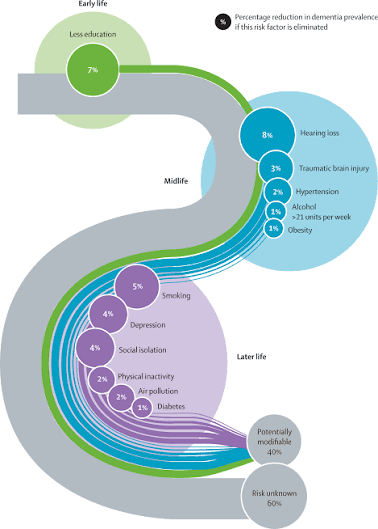
Dementia care. What jumps to mind? Medications, probably. Clinical protocols. Maybe a memory unit with locked doors and coded keypads. But that picture misses most of the story. Research keeps pointing somewhere else entirely — toward the rooms people sleep in, the light hitting their faces at noon, sounds bouncing off hard floors, the relationships that give a Tuesday any meaning at all. Those things matter. Enormously. Clinicians and care communities are rethinking design, staffing, and programming from scratch. Neuroscience keeps exposing how the brain reacts to its surroundings — and care standards are sprinting to catch up.
Environmental Design and Sensory Considerations
How spaces get built for people living with dementia has shifted dramatically. Take lighting. Appropriate light does more than help residents see — it regulates circadian rhythms, reduces sundowning, signals whether it’s six in the morning or six at night. Natural brightness during the day. Softer, dimmer light after dinner. A simple concept with a real, measurable impact. Color choices have entered the conversation too; certain wall tones and visual contrasts genuinely help residents move through a space without anxiety spiking. Flooring patterns, wayfinding photographs, familiar objects placed at eye level — none of that is decorative whimsy. It reflects hard-won understanding of how a dementia-affected brain actually processes sensory input. Acoustical treatments that dampen noise fall into the same category. Strip away overstimulation, and behavioral challenges often soften. Not coincidence. The environment doing what medication alone simply can’t.
The Role of Social Connection and Purposeful Programs
Social isolation hits the aging brain hard. Harder than most people expect. Research shows that meaningful connection — real conversation, shared tasks, the presence of someone who actually knows you — activates memory and emotion networks even when cognitive decline is significant. That’s not a small finding. Care communities have started building programs around that reality, moving away from generic group activities toward relationship-centered models tailored to each person. Intergenerational visits, where a child and a resident simply spend time together, engage different brain regions than a bingo card ever could. Pet therapy works similarly — the sensory engagement differs, and the emotional response follows. Life enrichment programming now tends to reflect what residents actually spent their lives caring about: their trades, their hobbies, the roles that once defined them. Because the brain responds to familiar meaning. Passive entertainment? Not so much.
Individualization and Person-Centered Care Standards
Here’s the core shift: modern dementia care refuses to treat a diagnosis as the whole story. Two people at the same cognitive stage can have entirely different communication styles, different triggers, different sources of comfort. Identical care plans don’t hold up. So assessment processes have expanded well beyond medical evaluations — they now pull in life histories, family relationships, personal rituals, what someone loved doing at forty. When a care team actually knows those things, the whole day changes. How they structure morning routines. How they respond when something goes sideways. Whether a resident feels seen or just processed. Communities offering Assisted Living, Memory Care, Personal Care, or Independent Living are adopting documentation systems that capture these stories and keep them accessible to every team member walking through the door. For families trying to understand how this looks in practice, SHINE® Memory Care in Bradenton, FL offers a structured approach grounded in current research on person-centered, environment-focused dementia support.
Training and Competency Standards for Care Team Members
None of these evolving standards mean anything without the people delivering care actually understanding them. Everyone — care partners, nurses, even administrative staff — needs working knowledge of dementia’s fundamentals. Not a one-time orientation. Real, ongoing education. Professional organizations have expanded competency requirements to include non-pharmacological approaches, person-centered communication techniques, environmental awareness. Why does that matter? A care partner who understands how a dementia-affected brain processes information will respond to a repeated question with patience rather than frustration. They’ll recognize that an outburst usually signals an unmet need, not defiance. They adjust. Communities are also measuring competency differently now — through observed behavior and resident outcomes, not classroom sign-in sheets. Meaningful change. The quality of someone’s day depends directly on what the person standing beside them actually knows and believes.
Conclusion
A decade ago, dementia care looked different. Less attention to environment. Less emphasis on individual history. Far less understanding of how social connection protects a brain under siege. That’s changed — and it keeps changing. Research on sensory processing, on the power of relationship, on what the brain needs to feel safe and engaged, has redrawn the map entirely. Communities doing this well aren’t simply following updated regulations; they’ve genuinely changed how they understand the people in their care. Dignity isn’t a program you schedule on Thursdays. It’s built into the light levels, the staffing ratios, the documentation systems, the way a care partner pauses before responding. Translating current research into daily practice — that’s the real work. And for everyone living with dementia, it makes all the difference.
