

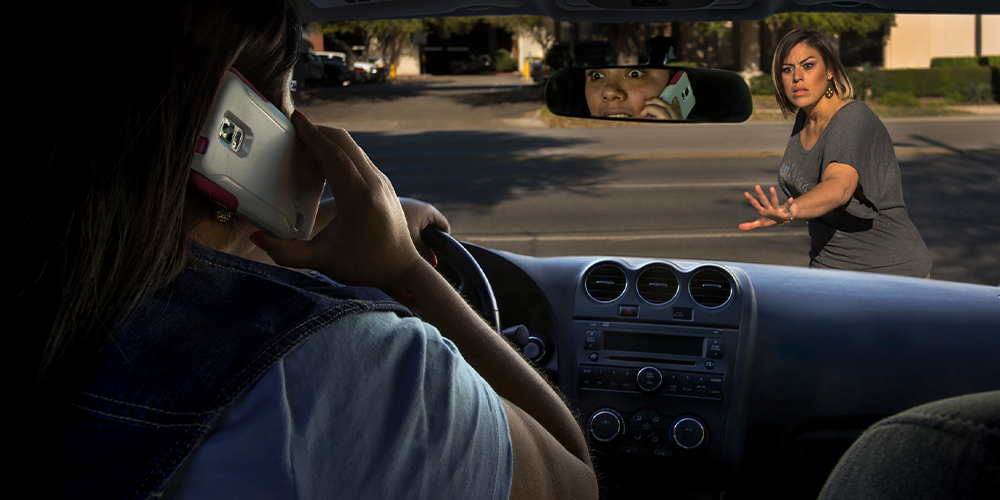
Mobile games demand continuous attention through notifications, timed challenges, multiplayer sessions, and rewards that encourage frequent interaction. Behind the wheel, checking a game notification or responding to an in-game message diverts attention from traffic, even when the interaction lasts only a few seconds. At highway speeds, that distraction can leave a driver traveling a considerable distance without watching the road.
Texas recorded 94,330 crashes involving distracted driving in 2023, resulting in 399 deaths and more than 2,793 serious injuries, according to the Texas Department of Transportation. Although these figures cover multiple forms of distraction rather than mobile gaming alone, they demonstrate the broader risks of using electronic devices while driving.
Texas Transportation Code § 545.4251 prohibits reading, writing, or sending electronic messages while operating a moving motor vehicle, subject to statutory exceptions. Other forms of phone use, including mobile gaming, can also provide evidence of negligent driving when they interfere with a driver’s ability to maintain proper attention and control.
In Houston, where drivers navigate congested freeways, intersections, and frequent stop-and-go traffic, determining whether phone use contributed to a collision often requires examining device activity, witness accounts, and available video footage. These are among the evidentiary issues addressed in distracted driving cases handled by Sutliff & Stout’s Houston car accident attorneys, a personal injury firm that reports recovering more than $1 billion for injured clients.
This guide explains how Texas distracted driving laws apply to mobile games, what happens when a driver causes an accident while using an app, how phone activity can establish negligence, and what gamers should know about using mobile devices on the road.
Is It Illegal to Play a Mobile Game While Driving in Texas?
Texas does not have one law that says “no games.” It has a statewide texting ban. Section 545.4251 of the Texas Transportation Code, in force since September 2017, makes it an offense to read, write, or send an electronic message while operating a moving vehicle. The law lists exceptions, such as using a hands-free device, using navigation, and reading a message that relates to the operation of the vehicle.
Games and apps fall into a gray area under that statute. A game that uses messages, such as a chat or invite, can raise the risk of breaking the rule. Many cities in Texas, including some in the Houston area, also have their own rules about handheld phone use.
Even when a game is not clearly banned, a driver can still be blamed in a crash. Texas law asks every driver to use ordinary care. A driver who looks at a game while driving is not using ordinary care.
From a court’s perspective, the question is not whether a law named the exact app. The question is whether the driver acted as a careful person would.
How Common Is Distraction on Texas Roads?
The numbers are large. Texas reported 94,330 distracted driving crashes in 2023. The Texas Department of Transportation later reported more than 86,000 such crashes in 2025, with nearly 300 deaths and more than 2,400 serious injuries, according to a Spectrum News report from April 2026. The agency said distracted driving deaths fell 3 percent and crashes fell 8 percent over a recent period.
That is progress, but the totals are still high. Every one of those crashes had a person who thought a quick look was safe.
Police reports record distraction only when someone admits it or a witness sees it. Real numbers are likely higher.
Why Are Games So Hard to Resist?
Game makers use tools that bring players back. These include streaks, timed events, limited offers, and alerts. A player who has a daily streak may feel pressure to log in even for a few seconds. A player in a team match may feel pressure not to let others down.
Those tools work well on a phone in a car. A red dot or a sound can pull the eyes down. A glance at a screen for five seconds at highway speed means driving the length of a football field without looking up.
A driver can lower the risk with a few simple habits.
- Turn on a “do not disturb while driving” mode before the car moves.
- Put the phone out of reach, such as in the glove box or in the back seat.
- Log in for daily rewards before leaving or after arriving.
- Tell teammates you are driving and will join later.
- Do not stream or record while driving.
What About Passengers?
A passenger who plays a game in a car is not breaking the driving law. The danger is when the passenger distracts the driver. Loud game sound, shouted calls, or showing the screen to the driver can all cause a crash.
Texas law may also come into play if a passenger takes the wheel or grabs controls. That is rare. More often, the risk is a quiet one. A teen driver, for example, may be tempted to look at a friend’s screen.
What About Rideshare and Delivery Drivers?
Many gig workers use apps all day. They accept rides, follow navigation, and read messages. These are different from games, but they also draw the eyes. A driver who uses an app should set up the phone in a mount before driving, use voice commands, and accept orders only when stopped.
If a rideshare driver causes a crash while on the job, several insurance policies may apply. The coverage often depends on whether the driver was logged in, had accepted a ride, or had a passenger. An injured person should ask for all policy details and speak with a lawyer.
Can a Phone Prove Distraction After a Crash?
Yes. A phone keeps records. These records can show calls, texts, and app use. A lawyer can send a letter asking the other driver to keep the phone and its data. If needed, a court can order the release of records.
A game may also keep its own logs. Some games record the time of play and the time of purchases. These records can show whether someone was active at the time of a crash.
This cuts both ways. A person who was hit and did nothing wrong has no reason to fear the records. A person who played a game before a crash faces a hard question about why.
How Does Texas Treat Shared Fault?
Texas uses proportionate responsibility. A person who is found more than 50 percent at fault cannot recover. A person who is 50 percent or less at fault can recover, but the award is reduced by that person’s share.
This matters when both drivers were distracted. If one driver was texting and the other was glancing at a game, a jury may divide the blame. An insurer for the other side will check the injured person’s phone use too. That is why injured people should not delete texts, calls, or app data after a crash. Deleting records can look like hiding the truth and can bring serious penalties.
What Should an Injured Person Do?
- Get medical care and keep all records.
- Call the police and ask for a report.
- Take photos of the scene and the vehicles.
- Ask whether the other driver was holding a phone, and write down what you saw.
- Keep your own phone and data as they are.
- Avoid recorded statements to any insurer.
- Speak with a lawyer about the deadline and proof.
Texas generally gives two years to file a lawsuit for personal injury, under section 16.003 of the Civil Practice and Remedies Code.
Graham Sutliff, a co-founder of the firm and a former Vinson & Elkins attorney, has been named a Texas Super Lawyer since 2012. The firm works on a contingency basis, which means clients pay no legal fees unless money is recovered. Past results do not promise a future outcome.
What Can the Gaming Community Do?
Gamers set the tone for each other. A guild or team can agree on a simple rule. No one plays while driving, and no one expects a reply from a driver. Streamers can remind viewers not to play and drive. Teams can share tips for using voice features only when stopped.
These small steps cost nothing. A match can wait. A quest can wait. A life cannot be replayed.
What Is the Main Message?
Texas roads see tens of thousands of distraction crashes each year. Mobile games are designed to be hard to put down, which makes them a special risk for drivers. The law bans texting while driving, and ordinary care rules apply to everything else. Players who put the phone away before the car moves protect themselves, their passengers, and everyone around them. For those who are hurt by a distracted driver, the path forward begins with care, careful records, and quick advice about the deadline.
