

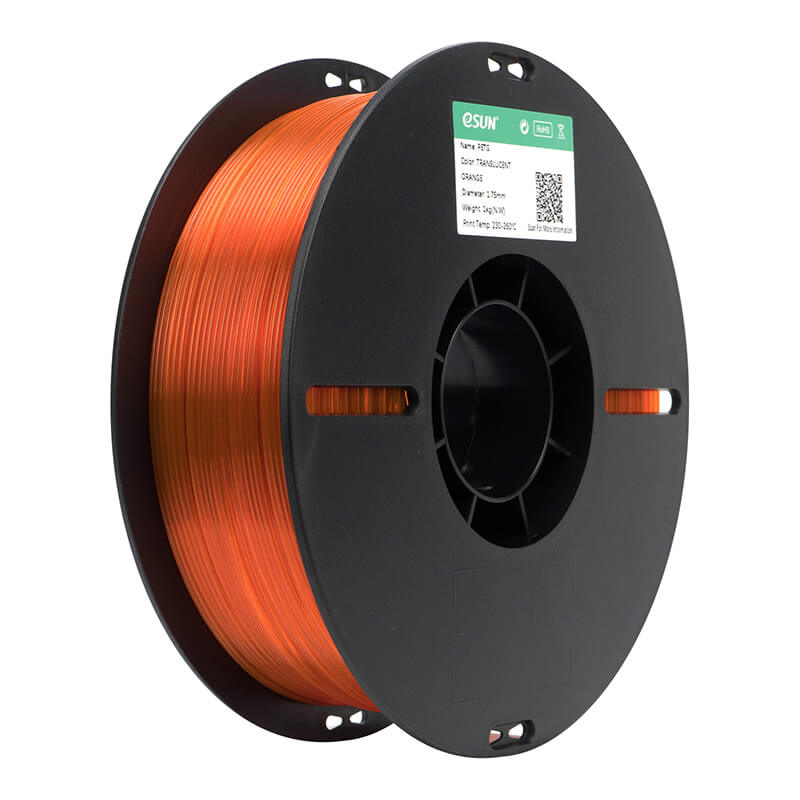
Introduction
As industries continue to adopt additive manufacturing, choosing the right material has become one of the most important decisions for engineers, designers, and manufacturers. Modern production environments require materials that combine strength, reliability, ease of printing, and cost efficiency. This is where PETG and PETG-Basic have become trusted solutions for businesses looking to improve product development and manufacturing workflows. These materials bridge the gap between easy-to-print plastics and engineering-grade performance, making them suitable for everything from functional prototypes to production-ready parts.
Manufacturers around the world increasingly rely on high-quality PETG filament because it delivers excellent layer adhesion, impressive durability, and reliable dimensional stability. Companies specializing in advanced 3D printing materials, including the solutions available through esun, continue to improve filament technology to meet industrial demands. Whether producing factory tools, custom fixtures, protective covers, or end-use components, PETG and PETG-Basic provide dependable performance while maintaining consistent print quality across a wide variety of applications.
Why PETG Has Become an Industrial Favorite
Industrial users need materials that perform consistently under demanding conditions while remaining simple to print. PETG has gained widespread popularity because it combines the best characteristics of PLA and ABS without many of their common drawbacks. It offers excellent toughness, good flexibility, low shrinkage, and outstanding layer bonding, allowing manufacturers to create parts that withstand repeated use without becoming brittle. Its chemical resistance also makes it suitable for environments where oils, cleaning agents, or mild industrial chemicals are present.
Another major advantage is its excellent printability. Unlike some engineering filaments that require enclosed printers or extremely high temperatures, PETG can be printed successfully on many professional and desktop 3D printers. Reliable extrusion, reduced warping, and smooth surface finishes help manufacturers reduce failed prints and improve productivity. For businesses using professional-grade PETG filament from trusted suppliers, consistent diameter tolerance and material quality contribute to repeatable production results that save both time and operational costs.
Understanding the Benefits of PETG-Basic for Everyday Manufacturing
PETG-Basic has become an attractive option for organizations that need dependable performance without unnecessary complexity or excessive material costs. It provides many of the mechanical advantages associated with standard PETG while focusing on ease of use and affordability. This makes it particularly valuable for companies producing prototypes, manufacturing aids, educational models, maintenance components, and low-volume production parts where consistent quality remains essential.
The balanced properties of PETG-Basic allow businesses to scale their additive manufacturing operations more efficiently. Strong layer adhesion helps create durable parts capable of handling moderate mechanical loads, while its dimensional accuracy supports precision manufacturing. Since PETG-Basic prints smoothly on a wide range of FDM printers, organizations can expand production capacity without investing in specialized hardware. This practical combination of performance and accessibility has made PETG-Basic an excellent choice for both experienced manufacturers and businesses beginning their industrial 3D printing journey.
Key Industrial Applications of PETG and PETG-Basic
Across numerous industries, PETG and PETG-Basic continue to demonstrate remarkable versatility. Manufacturing companies frequently produce assembly jigs, alignment fixtures, inspection gauges, and machine accessories that simplify production processes while reducing tooling costs. These custom components can be designed, printed, tested, and implemented within days rather than waiting weeks for traditional machining methods. Faster production cycles allow businesses to respond quickly to changing customer requirements and improve operational efficiency.
Healthcare equipment manufacturers, educational institutions, electronics companies, automotive suppliers, and research laboratories also benefit from these materials. PETG is commonly used to manufacture protective covers, equipment housings, cable management systems, storage organizers, prototype enclosures, laboratory tools, and visualization models. Meanwhile, PETG-Basic serves as an economical solution for concept validation, demonstration models, replacement components, and internal manufacturing tools. The flexibility offered by both materials enables organizations to select the most appropriate filament based on performance requirements, production volume, and project budgets without sacrificing print reliability.
Selecting High-Quality PETG Filament for Reliable Results
Material quality plays a significant role in achieving consistent industrial printing performance. High-quality PETG filament should offer precise diameter control, excellent roundness, stable moisture resistance during storage, and smooth extrusion characteristics throughout long print jobs. Poor-quality materials often introduce inconsistent flow, stringing, clogging, or weak layer adhesion, increasing production costs through failed prints and wasted machine time. Choosing reliable filament from experienced manufacturers helps maintain productivity while ensuring predictable mechanical performance.
Professional material developers continuously refine filament formulations to improve print consistency and finished part quality. Advanced manufacturing processes help ensure uniform material properties from spool to spool, making production planning more reliable. Companies seeking dependable industrial materials often evaluate supplier expertise, research capabilities, quality control procedures, and product testing before selecting filament solutions. Providers featured through esun offer a broad portfolio of materials developed for professional additive manufacturing applications, allowing users to choose PETG filament and PETG-Basic options suited to different engineering and production needs while maintaining dependable print performance.
Best Practices for Printing PETG and PETG-Basic Successfully
Achieving excellent results requires more than selecting the right filament. Proper printer calibration, clean build surfaces, controlled print temperatures, and appropriate cooling settings all contribute to stronger, more accurate parts. PETG generally benefits from moderate print speeds that promote consistent layer bonding while minimizing printing defects. Maintaining dry filament storage also helps preserve material quality, as excessive moisture can affect surface finish and extrusion stability over time.
Design considerations further improve industrial printing outcomes. Engineers often optimize wall thickness, infill density, and part orientation to maximize strength while minimizing material usage and print duration. Rounded corners can reduce stress concentrations, while thoughtful support placement simplifies post-processing. PETG-Basic follows many of these same principles, making it an accessible option for organizations seeking reliable production without extensive parameter adjustments. Combined with high-quality filament and proper machine maintenance, these practices help manufacturers produce durable, repeatable components suitable for demanding industrial environments.
Future Trends for PETG Materials in Industrial 3D Printing
Industrial additive manufacturing continues evolving as companies pursue faster development cycles, localized production, and more sustainable manufacturing methods. PETG and PETG-Basic remain well positioned to support these trends because they balance performance, affordability, and ease of use. As printer technologies become more advanced and production systems increasingly automated, demand for reliable filaments capable of delivering consistent quality across large production runs is expected to continue growing.
Material innovation also continues expanding the capabilities of PETG-based products. Manufacturers are improving mechanical strength, print consistency, environmental performance, and processing characteristics to meet increasingly specialized industrial requirements. Businesses adopting digital manufacturing strategies recognize that dependable materials reduce operational risk while improving production flexibility. As more industries embrace distributed manufacturing and rapid customization, PETG filament will continue serving as one of the foundational materials supporting practical, efficient, and scalable 3D printing solutions for organizations worldwide.
Conclusion
PETG and PETG-Basic have established themselves as dependable materials that meet the evolving needs of modern industrial manufacturing. Their combination of strength, excellent layer adhesion, reliable printability, dimensional stability, and cost-effective performance makes them valuable choices for prototypes, production tooling, functional components, and end-use applications. From small businesses to large manufacturing facilities, organizations benefit from materials that consistently deliver high-quality results while simplifying the additive manufacturing process.
Selecting premium PETG filament from experienced material manufacturers is equally important for achieving long-term success. Reliable material quality, consistent production standards, and ongoing innovation contribute to stronger parts, fewer print failures, and greater manufacturing efficiency. Businesses exploring advanced 3D printing solutions through esun can find professional-grade PETG and PETG-Basic materials designed to support a wide range of industrial applications, helping transform creative designs into dependable real-world products with confidence.
