

Introduction to Rummy Card Game Strategies
The rummy card game combines pattern recognition, memory, and decision-making. While the exact strategy depends on the variation, players generally benefit from organising their cards carefully and understanding which combinations they are trying to form.
A good strategy does not guarantee a win. The cards available, the actions of other players, and the rules of the particular format all affect the outcome.
This guide explains practical concepts for understanding card combinations and making more informed decisions during a game.
For more information about rummy-related topics, visit All Rummy.
Start by Organising Your Hand
The first useful step is to group cards in a way that makes possible combinations easy to recognise.
Place cards of the same suit together. This helps identify consecutive values that might form a sequence.
Next, look for cards of the same rank. These may form sets if the suits and other requirements are correct.
Finally, examine isolated cards that do not currently fit any combination.
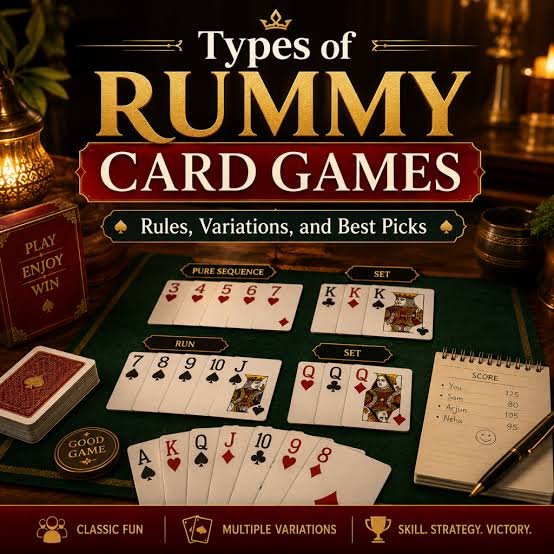
For example, a hand containing the 4 and 5 of hearts, two queens, and several unrelated cards presents different possibilities. The hearts might form a sequence, while the queens might become part of a set.
Organising the hand makes these possibilities easier to compare.
Understand the Importance of Sequences
A sequence consists of consecutive cards from the same suit. In standard Indian 13-card rummy, at least one pure sequence is required for a valid declaration.
For this reason, players should understand how pure sequences work before focusing entirely on sets or joker combinations.
A hand may contain several useful-looking groups but still be invalid if the mandatory pure sequence is missing.
Recognising sequence possibilities early makes it easier to evaluate which cards are useful and which may be unnecessary.
Evaluate Sets Carefully
Sets contain cards of the same rank in different suits. For example, three jacks from different suits may form a set.
If you hold two cards of the same rank, consider whether a third card could complete the set. However, do not assume that every matching pair should be kept indefinitely.
The value of a potential set depends on the other cards in your hand, the progress of the round, and the specific rules.
Reviewing your entire hand helps prevent one possible combination from distracting you from better options.
Think Before Discarding
Discarding is an essential part of the draw-and-discard process.
Before discarding, ask yourself three questions:
- Does the card contribute to an existing sequence or set?
- Could the card reasonably help complete another combination?
- Is there a more useful card that can be discarded instead?
These questions provide a simple framework for evaluating your options.
For example, if you have the 8 and 9 of diamonds, the 7 or 10 of diamonds may help complete a sequence. A completely unrelated card might be a better discard, depending on the rest of the hand.
No single rule determines the correct discard in every situation.
Observe the Discard Pile
The discard pile provides information about cards that have already appeared.
If a card you need has been discarded and taken by another player, that may affect your available options. Similarly, repeated discards can help you understand which cards other players may be avoiding.
However, these observations are incomplete. A player may hold cards that are not visible to you, and a discard does not reveal their entire strategy.
Use observations as clues rather than as proof.
Understand Jokers and Their Limitations
Jokers can substitute for missing cards in eligible combinations under many rummy rules.
For example, a joker may help complete an impure sequence or a set. Nevertheless, a joker usually cannot substitute for a missing card in the mandatory pure sequence in standard Indian 13-card rummy.
Players should learn the exact rules before deciding how to use jokers.
It is also important not to assume that a joker makes every incomplete group valid. The remaining cards must still satisfy the rules for their particular combination.
Learn the Rules of the Specific Variation
A strategy that works in one rummy game may not apply to another.
Indian 13-card rummy, gin rummy, and other variations can differ in hand size, scoring, and completion requirements.
Rummy 51 is another name that readers may encounter while researching card games. Its exact rules should be confirmed from the instructions for the particular version being discussed.
Before applying a strategy, identify the format and understand its requirements.
Manage Time and Avoid Rushed Decisions
When a game has a time limit for each turn, rushed decisions can lead to avoidable mistakes.
Try to develop a simple routine: organise the hand, identify possible combinations, review the previous discards, and then choose a card to discard.
The routine does not need to be complicated. Consistent attention to the rules can be more useful than trying to memorise an elaborate strategy.
If you are learning the game, practise slowly in an offline or free environment.
Common Strategic Mistakes
One common mistake is keeping too many unrelated cards because they might become useful later. Another is focusing on a set while neglecting the required pure sequence.
Some beginners also discard without checking whether a card connects two potential combinations.
A further mistake is applying the rules of one variation to another. Different games may have different requirements, so check the format first.
Further Rummy Learning Resources
Understanding the rules is the foundation of any strategy. Readers who want to learn about rummy terminology, sequences, sets, and variations can explore https://allrummyss.com/.
A clear explanation of the format can help beginners understand the decisions they face during a game.
Play Responsibly
Card games should remain a form of entertainment. Do not treat gameplay as a dependable income source, chase losses, or spend money needed for essential expenses.
Where applicable, check age restrictions and local laws before using a digital platform.
Conclusion
Rummy card game strategies begin with understanding the rules and organising the hand. Recognising sequences, identifying sets, evaluating discards, and observing the visible cards can help players make more informed decisions.
No strategy guarantees success, but learning the fundamentals provides a better foundation for understanding the game. Explore additional rummy topics at https://allrummyss.com/.
