

Mushroom-related discussions can quickly become difficult to follow because they often combine scientific terminology, biological classifications and modern product language. Terms such as psilocybin, psilocin, extracts, strains, varieties and microdosing may appear in the same article, even though they describe very different concepts.
Understanding this vocabulary makes it easier to read product descriptions and evaluate information without relying on assumptions. It is particularly useful when different mushroom formats are presented alongside one another in an online catalogue. Rather than treating every term as a marketing label, readers can look at what each word actually describes and distinguish scientific terminology from informal language.
Psilocybin, Psilocin and Psychedelic
Psilocybin and psilocin are closely related chemical compounds associated with certain mushroom species. Psilocybin is a naturally occurring compound that can be converted by the body into psilocin. Both belong to a broader group of substances commonly discussed in relation to psychedelic mushrooms.
The word psychedelic, however, describes a broader category rather than a single compound. It is generally used to describe substances associated with distinctive changes in perception, cognition or sensory experience. The term therefore should not be treated as a synonym for psilocybin.
These distinctions matter because product descriptions can sometimes use several related terms together. A scientific term identifies a compound or category, while a commercial description may use broader language intended to help consumers understand what type of product is being discussed.
The terminology also has legal significance. A substance’s scientific classification does not automatically determine whether it is legal to possess, sell or distribute in a particular jurisdiction. Regulatory status depends on applicable laws, which can change over time.
For that reason, readers benefit from separating three questions: what a term means scientifically, how it is used in product descriptions and what legal framework applies to the substance in question.
Species, Strains and Varieties
Biological terminology can become confusing because words such as species, strain and variety are sometimes used differently in scientific and community settings.
A species is a fundamental biological classification. It is used to group organisms according to established biological relationships and characteristics. When discussing mushrooms, species names can provide more precise information than general terms such as “magic mushrooms.”
The word strain is more complicated. In microbiology and cultivation contexts, it can refer to a particular genetic line or population within an organism. In online mushroom communities, however, the term may sometimes be used more loosely to describe named forms or selections.
Variety can also have different meanings depending on context. In formal biological classification, varieties have a specific taxonomic meaning. In consumer-facing discussions, the word may simply be used to distinguish one named form from another.
This is why product names should not automatically be interpreted as scientific classifications. A name appearing on a package may be useful for identifying a product, but it does not necessarily provide enough information to establish its precise biological classification.
Understanding this distinction can help readers approach mushroom terminology more critically. Scientific names, informal community names and commercial product names can overlap, but they do not always mean exactly the same thing.
Dried Mushrooms, Extracts and Edibles
Product format is another important part of mushroom vocabulary. Dried mushrooms, extracts and edibles can all appear within discussions of mushroom products, but each term describes a different presentation or formulation.
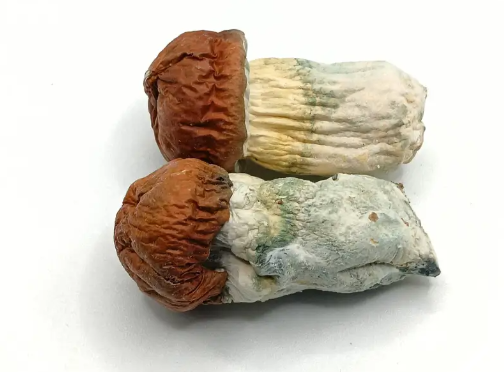
Dried mushrooms generally refer to mushroom material that has undergone a drying process. The physical mushroom remains recognisable, although its appearance and texture may differ substantially from fresh material.
An extract is produced through a processing method designed to separate or concentrate particular components of the source material. The word extract therefore describes a processed ingredient rather than simply a different name for a dried mushroom.
Edible is a broader product-format term. It can refer to a formulated food-style product containing mushroom-derived ingredients, such as chocolate, gummies or other confectionery formats. The term does not by itself establish which mushroom ingredients are present or how they were processed.
For readers who want to browse the available products on an online mushroom retailer such as Shrooms Direct, understanding these distinctions can make category pages easier to interpret. Shrooms Direct provides a range of mushroom-related formats, so recognising whether a listing refers to dried material, capsules, chocolate or another formulation helps readers understand the catalogue without treating every product as equivalent.
Product descriptions remain important because the same broad category can contain significantly different formulations. A careful reader should therefore look at the ingredients, format and specifications rather than relying only on a product’s general category name.
Microdosing and Other Common Terms
Microdosing is a term frequently encountered in online discussions about psychedelic substances. Broadly, it refers to the practice of using amounts that are intended to be substantially smaller than those associated with a typical psychoactive experience. However, the term is not itself a precise scientific measurement.
Online discussions may also include words such as “journey,” “trip,” “stack,” “functional mushrooms” or “medicinal mushrooms.” These terms have different meanings and can vary significantly in how they are used.
Some terms have relatively clear scientific definitions, while others come from community discussions or commercial marketing. This makes context particularly important. A product description may use a familiar term to categorise an item without providing a scientific explanation of every characteristic associated with that word.
Readers should also avoid assuming that a term implies a guaranteed outcome. Language describing a product category is not the same as evidence demonstrating a particular effect. This distinction becomes especially important when product descriptions contain informal terminology alongside scientific-sounding language.
Understanding common vocabulary is therefore less about memorising every phrase and more about recognising the difference between established definitions and informal usage.
Potency, Consistency and Variability
Potency, consistency and variability are three terms that frequently appear in mushroom-related discussions, but they should not be treated as interchangeable.
Potency generally refers to the strength or concentration of a particular active component. The precise meaning depends on the substance being measured and the method used to assess it. A product name alone cannot necessarily establish its potency.
Consistency refers to how similar a product remains across units or batches. Formulated products may be designed with greater standardisation, while natural biological materials can display inherent variation. The extent of consistency depends on the raw material, processing methods and quality-control procedures.
Variability describes differences that can occur between samples, organisms, batches or products. Biological materials naturally vary because genetics, growing conditions, harvesting and processing can all influence their characteristics.
These concepts are particularly important when reading marketing claims. A statement suggesting that every natural mushroom is identical would overlook biological variation. Conversely, a statement suggesting that a product is completely unpredictable may also oversimplify the role of cultivation, processing and quality control.
Clear product information should therefore distinguish measurable specifications from broad promotional descriptions. Where testing or batch information is provided, that information can offer more useful context than unsupported claims.
Separating Scientific Terms From Marketing Terms
One of the most useful skills for first-time readers is recognising when a term has a scientific meaning and when it is being used primarily for marketing or community communication.
Several approaches can help:
- Check the definition: Scientific terms should have identifiable meanings that can be verified through reliable references. If a term appears to have several unrelated meanings, additional context may be necessary before drawing conclusions.
- Look at the ingredient information: A product name can be broad or creative, while an ingredient list provides more concrete information about what is actually included. This is particularly important for products containing powders, extracts or multiple ingredients.
- Separate descriptions from claims: Words describing a product’s format, ingredients or appearance are different from statements promising a particular outcome. Responsible product information should make that distinction clear.
- Compare terminology across sources: Government agencies, scientific publications and recognised organisations can provide useful definitions for technical terms. Comparing these with informal online usage can reveal where terminology has been simplified or repurposed.
- Consider the context: The same word may have a specialised scientific meaning and a broader consumer meaning. Understanding the context prevents a familiar term from being interpreted more precisely than the source intended.
- Check current regulatory information: Scientific terminology and legal terminology are not identical. A substance may have a well-established scientific description while its legal status differs between countries or jurisdictions.
Good product literacy depends on understanding this difference. Scientific vocabulary can describe compounds, organisms and processes, while marketing vocabulary often focuses on presentation, categorisation and consumer appeal. Neither should automatically be treated as interchangeable.
Conclusion
Mushroom terminology can seem complicated at first because it combines scientific language, biological classification, product descriptions and informal community vocabulary. Learning the basic distinctions makes the subject considerably easier to navigate.
Psilocybin and psilocin describe specific compounds, while psychedelic is a broader category. Species, strains and varieties can refer to different levels of biological or informal classification. Dried mushrooms, extracts and edibles describe different forms or formulations, while terms such as microdosing require careful interpretation rather than being treated as precise scientific measurements.
The most useful approach is to look beyond individual words. Ingredient lists, product descriptions, scientific references and current regulatory information provide context that marketing terminology alone cannot provide. With a stronger vocabulary, first-time readers can evaluate mushroom-related information more critically and understand product categories without making assumptions based solely on names or promotional language.
