

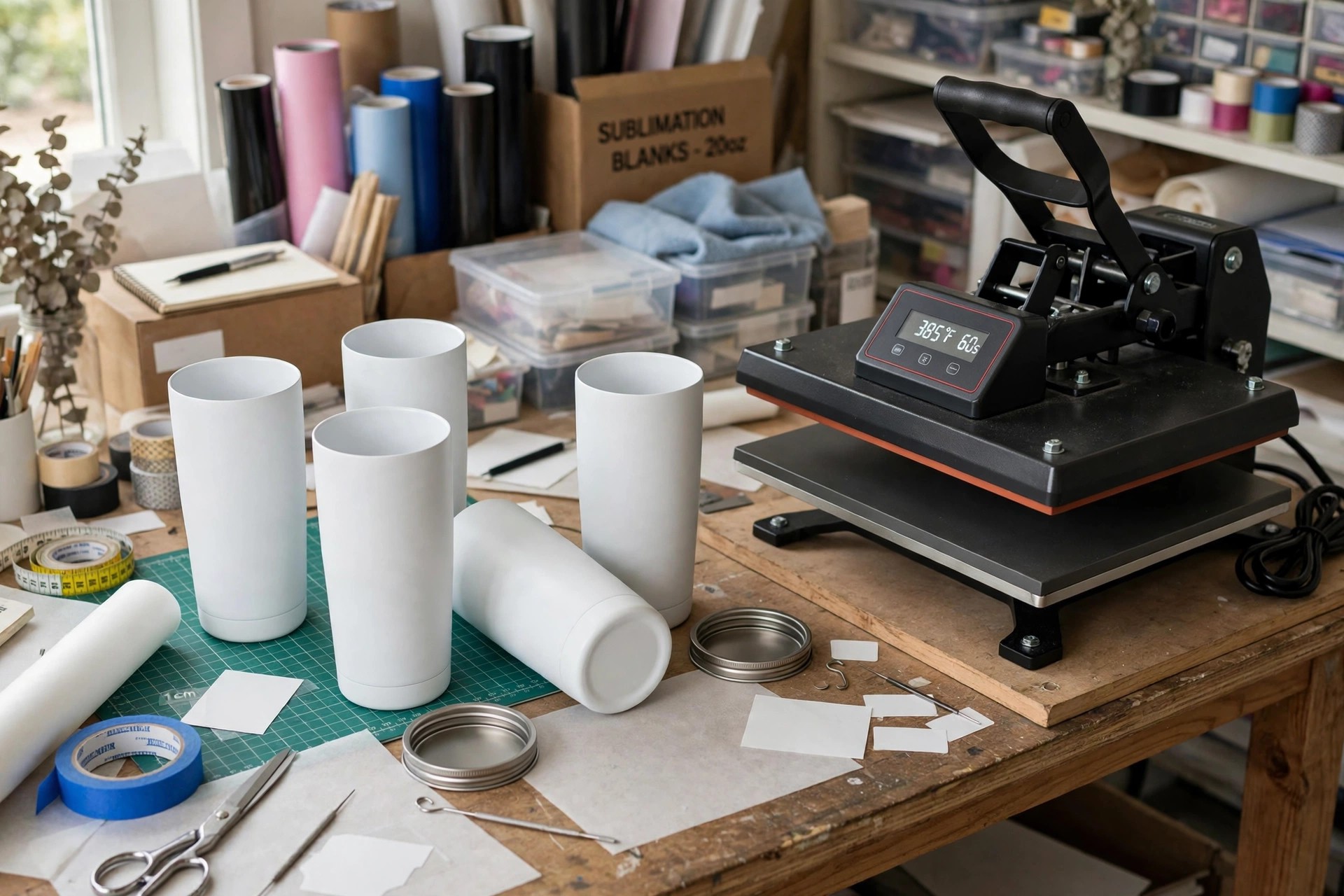
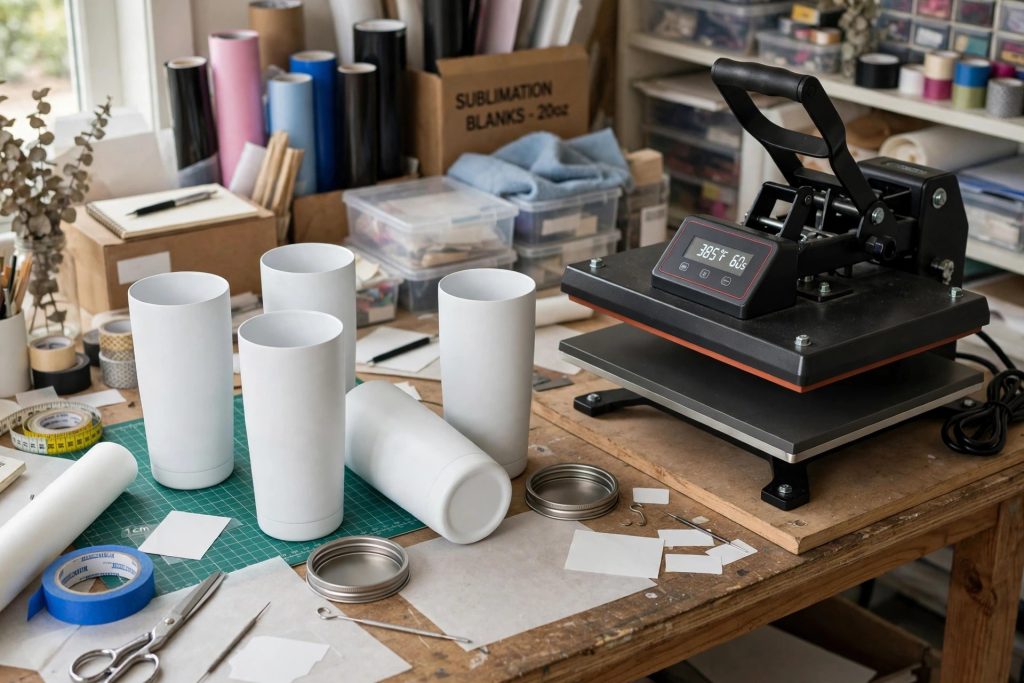
For crafters and small businesses, few products offer as much creative freedom as sublimation tumbler blanks. These specially coated cups accept heat-transferred artwork that becomes part of the surface itself, producing vivid, permanent designs that will not peel or fade. Besin supplies wholesale blanks made for exactly this process, giving printers a reliable canvas for everything from photo tumblers to branded merchandise. This article explains the artwork printing techniques that produce professional results on sublimation tumbler blanks, and how Besin blanks help makers achieve them consistently.
How Sublimation Printing Works on Tumbler Blanks
Sublimation printing on sublimation tumbler blanks works through heat and pressure. A design is printed with sublimation ink onto transfer paper, wrapped tightly around the blank, and heated until the ink turns to gas and bonds with the polymer coating. Besin blanks are coated evenly for this reaction, which is why colors come out rich and gradients stay smooth. Unlike vinyl decals that sit on the surface, a sublimated design on Besin blanks becomes part of the cup, so it survives daily washing and handling without cracking or lifting at the edges.
The quality of the finished cup depends heavily on the blank, and sublimation tumbler blanks from Besin are made to tight tolerances for diameter and coating thickness. A blank that varies even slightly can cause uneven pressure and faded patches, which is why experienced printers standardize on one supplier. Besin wholesale blanks give makers that consistency across batches, so a design that prints perfectly once will print perfectly again. This reliability matters most for sellers fulfilling repeat orders, where customers expect every Besin cup to match the last one exactly.
Preparing Artwork for Crisp, Lasting Prints
Artwork preparation is where great prints on sublimation tumbler blanks begin. Besin recommends designing at high resolution, at least 300 dots per inch at full wrap size, so fine text and photo details stay sharp after transfer. Colors should be set in RGB, since sublimation printers interpret RGB values more vividly than CMYK, and Besin blanks reward that choice with bright, accurate color. Leave a small bleed beyond the wrap edges so no white line appears at the seam, and mirror the artwork before printing, because the transfer reverses the image onto Besin cups.
Choosing the Right Blank for Your Design
Choosing the right blank is a creative decision as much as a technical one. Besin offers sublimation tumbler blanks in several sizes and finishes, from straight skinny tumblers for full-wrap photo designs to tapered styles that suit logos and text layouts. A glossy finish makes colors pop, while a matte finish gives a softer, modern look, and the Besin wholesale range covers both. Makers should match the blank to the design: busy, colorful artwork shines on straight-walled Besin blanks, while simple monograms look elegant on tapered ones.
Testing is a habit that separates professionals from beginners with sublimation tumbler blanks. Besin advises pressing a single test cup whenever a new design, paper, or press setting is introduced, because small changes in temperature or time shift color noticeably. A test press on a Besin blank reveals whether reds run orange, blacks look washed out, or fine lines blur, and adjustments can be made before committing to a full batch. This discipline saves blanks, ink, and time, and it protects a seller’s reputation for consistent Besin quality.
Heat Press Tips for Flawless Transfers
Heat press technique is the final variable in printing sublimation tumbler blanks. Besin blanks press best when the transfer is taped snugly with no air gaps, since trapped air causes ghosting and faded spots. Most makers use a mug press or tumbler press at the temperature and time their ink supplier recommends, and Besin blanks tolerate the standard range without coating damage. Rotating the cup midway through longer presses evens out heat, and allowing the Besin cup to cool before removing the paper prevents smudging on the fresh transfer.
Finishing and Caring for Printed Tumblers
Finishing touches protect the print on sublimation tumbler blanks for years of use. Besin recommends hand washing printed cups, even though sublimated designs are durable, because dishwasher heat slowly dulls any coating over time. Inspecting each finished cup under good light catches dust specks or seam gaps before shipping, and Besin wholesale quality makes such defects rare. Packaging printed cups in protective sleeves keeps them pristine in transit, so customers receive a Besin product that looks exactly as good as the listing promised.
Color management deserves special attention when printing sublimation tumbler blanks. Besin blanks reproduce color faithfully, but monitors, printers, and heat presses each shift color slightly, so what looks perfect on screen can print a shade warmer or cooler. Experienced makers build a small color chart by pressing test swatches of their most-used colors onto a Besin blank, creating a physical reference they can check before running a full order. This chart also helps when a customer supplies a logo with strict brand colors, because the maker can show exactly how those colors will appear on Besin coatings. Taking ten minutes to calibrate saves hours of reprints, and Besin wholesale blanks are affordable enough that keeping a dedicated test cup for each new color palette is a sensible habit rather than a luxury.
Mastering artwork printing takes practice, but the right blanks make the learning curve far gentler. With even coatings, consistent sizing, and wholesale pricing that supports testing, Besin is a trusted source for makers building a tumbler business. Start with quality sublimation tumbler blanks, refine your technique one press at a time, and Besin blanks will reward you with vivid, durable designs your customers will love.
