

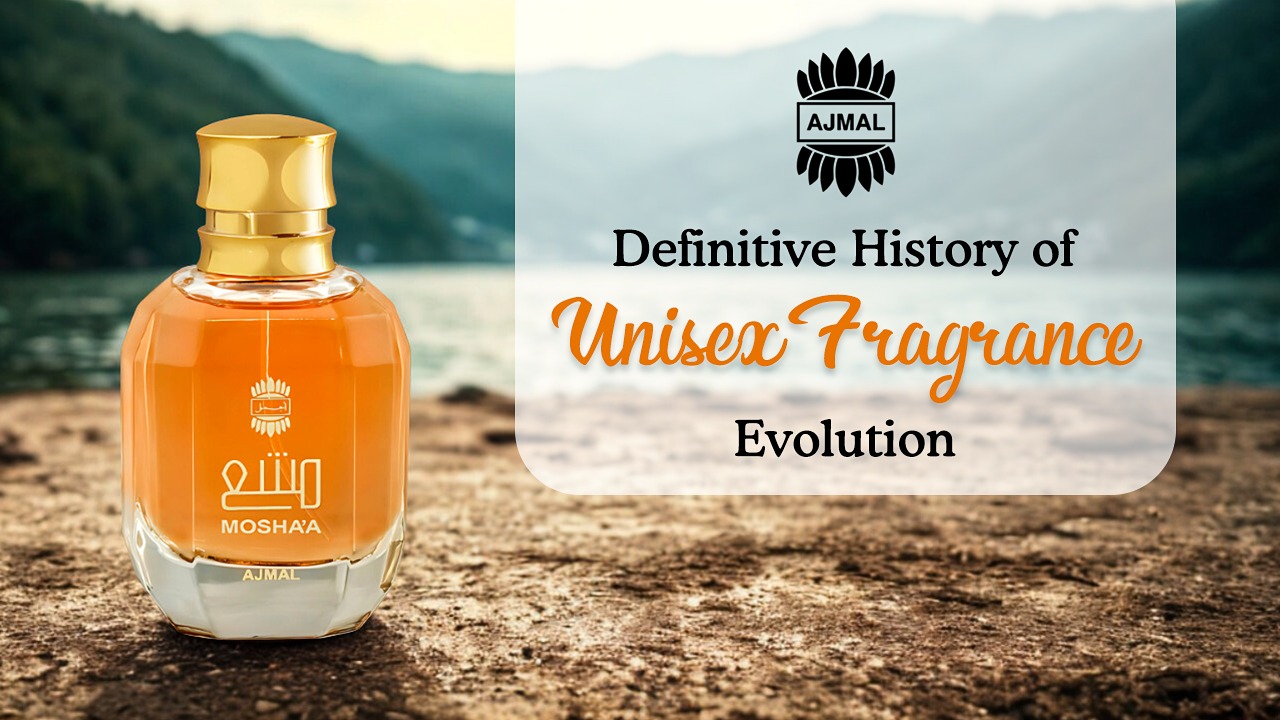
Did you know that in ancient times there was no such thing as men’s or women’s perfume? Scents were simply part of life used in temples, homes and royal courts by all. The story of unisex fragrances is not new at all it is just been rediscovered, refined and celebrated again in today’s modern perfume world.
In this post we will go on a journey by time exploring how scent evolved from ritual and royalty in fashion and freedom. You will see how the art of mixing turned in a universal expression that speaks to men and women equally just like the unisex collections from Ajmal which carry years of olfactory heritage in each drop.
How It All Began: The Ancient Age of Scent
Perfume history starts thousands of years ago in Egypt, Arabia and Mesopotamia. Back then people burned resins like frankincense and myrrh to please the gods & purify spaces. These early scents were shared by all. There were no gender lines fragrance was sacred, symbolic and deeply personal.
The Arab world especially regions around what is now the UAE played a huge role in shaping perfume traditions. Oud, amber and musk were considered gifts of the earth rare, powerful and healing. These ingredients still define Middle Eastern perfumery today and are found in refined combos like Dahn Al Oudh Qadeem and Amber Wood two of Ajmal’s timeless unisex creations that continue this proud heritage.
The Royal Touch: Scents in the Golden Eras
By the time the Greeks and Romans embraced perfume it had become a sign of status and pleasure. But again men and women used the same oils. Royal courts favored amber, rose and sandalwood rich and sensual ingredients that symbolized power and beauty.
In medieval times perfumes moved westward with trade reaching Europe by Arab merchants. The world started seeing perfumes in bottles worn for daily joy instead of rituals. Yet it was still unisex. People loved how fragrance made them feel confident, clean connected.
This connection between heritage and emotion is what makes Ajmal’s Amber Leather and Patchouli Wood so unique today. They remind us of that ancient luxury the deep and warm combo that feels equally strong on anyone who wears it.
When Gender Entered the Scene
The distinction between men’s and women’s scents emerged considerably later in the nineteenth and early twentieth centuries as marketing began to affect identity. Fresh citrus and woody overtones were marketed as manly and floral and sweet tones were classified as feminine.
But in reality scent does not follow gender rules. A rose can be bold and musk can feel soft. This realization began to re emerge in the 1990s when the perfume world started breaking old norms again. People wanted authenticity not labels.
Ajmal’s creations like Musk Silk Supreme and Wisal Layl show how this balance works beautifully. They mix warm musk, light floral and a hint of spice modern, confident and truly inclusive.
The Rise of Modern Unisex Perfumery
By the early 2000s the concept of unisex perfumes became a fresh turn. Global brands began celebrating individuality. Consumers started seeking scents that expressed mood and personality rather than gender.
Luxury houses, niche perfumers and heritage brands began returning to neutral tones earthy, ambery and floral woody combinations. This shift opened the door to timeless collections like Amber Santal, Wisal Dhahab and Aurum Elixir which balance depth and lightness so naturally that they suit anyone, anywhere.
These perfumes aren’t designed to fit a category they are designed to fit you.
Why Unisex Perfumes Feel So Modern
The world today is more connected and expressive than ever. People value individuality and inclusivity. A versatile unisex perfume fits each lifestyle if you are dressing for an office, a dinner or a quiet evening walk.
Unisex scents are practical, emotional and stylish all at once. They adapt to body chemistry so the same perfume smells slightly different on everyone’s personal and shared. That is why fragrances like Strings of Oud and Amber Poivre stand out they evolve naturally never feeling too bold or too soft.
Perfume now is about how it makes you feel not what label it carries.
Cultural Influence: How the Middle East Shaped the Global Perfume Story
When you trace perfume’s roots the Middle East stands as the true heart of its history. The ancient use of oud, amber and musk gave birth to the modern perfume structure. Even Western perfume houses today look eastward for inspiration.
Ajmal with years of perfume expertise carries this legacy forward. Their unisex creations from Mukhallat D’Oudh Al Muattaq to Violet Musc capture the deep traditions of oud blending while giving it a fresh and global identity.
Middle Eastern perfumery does not just tell stories of heritage. It brings balance between warmth and freshness, luxury and daily comfort. That is what makes it timeless.
The Art of Layering: Creating Your Personal Signature Scent
One of the exciting things about unisex fragrances is how beautifully they combine. You can wear them alone or layer them to make a scent that is entirely yours.
Here are some easy unisex scent layering tips to try
- Combine a deep oud based perfume like Dahn Al Oudh Shams with a light floral like Wisal for balance.
- For a warm evening combo try Amber Musc with Marmuqa to mix sweetness and spice.
- Want something airy and long lasting? Layer Aurum Elixir over Qasida Dahabia.
Layering allows you explore personality by scent each mix tells a new story and no two people smell exactly alike.
Unisex Perfumes: The Future of Fragrance
Experts today predict that the future of perfumery lies in neutrality and individuality. Reports from 2025-2026 trends show a growing demand for inclusive scents that match emotions not demographics. People are buying fewer bottles but picking smart perfumes that work day and night, at home or travel for any event.
That is where Ajmal stands strong. With creations like Rhythm of Oudh, Amber Santal and Barakah they offer harmonious compositions that reflect freedom, elegance and craftsmanship. These perfumes prove that the most powerful statement is not about being either masculine or feminine it is about being yourself.
From Ancient Oils to Modern Bottles: A Classic Connection
When you spray a modern unisex perfume today you are continuing a tradition that began thousands of years ago. The bottles may have changed but the essence remains the desire to express, to connect and to leave a trace of memory behind.
Ajmal’s unisex collection from the soft musk of Mosha’a to the deep woodiness of Patchouli Wood is a beautiful reminder that scent is one of the few things that truly unites us.
Perfume does not belong to a gender. It belongs to the soul.
Conclusion: The New Language of Scent
The evolution of unisex fragrance is not a story of style it is a reflection of freedom. From the incense of temples to the bottles on modern vanities perfume has always been about emotion not division.
Today’s unisex perfumes are an invitation to explore, express and embrace individuality. If you reach for Amber Leather, Wisal Layl or Aurum Elixir each one carries the spirit of shared beauty and timeless balance.
Fragrance has come full circle back to where it all began belonging to everyone.
