

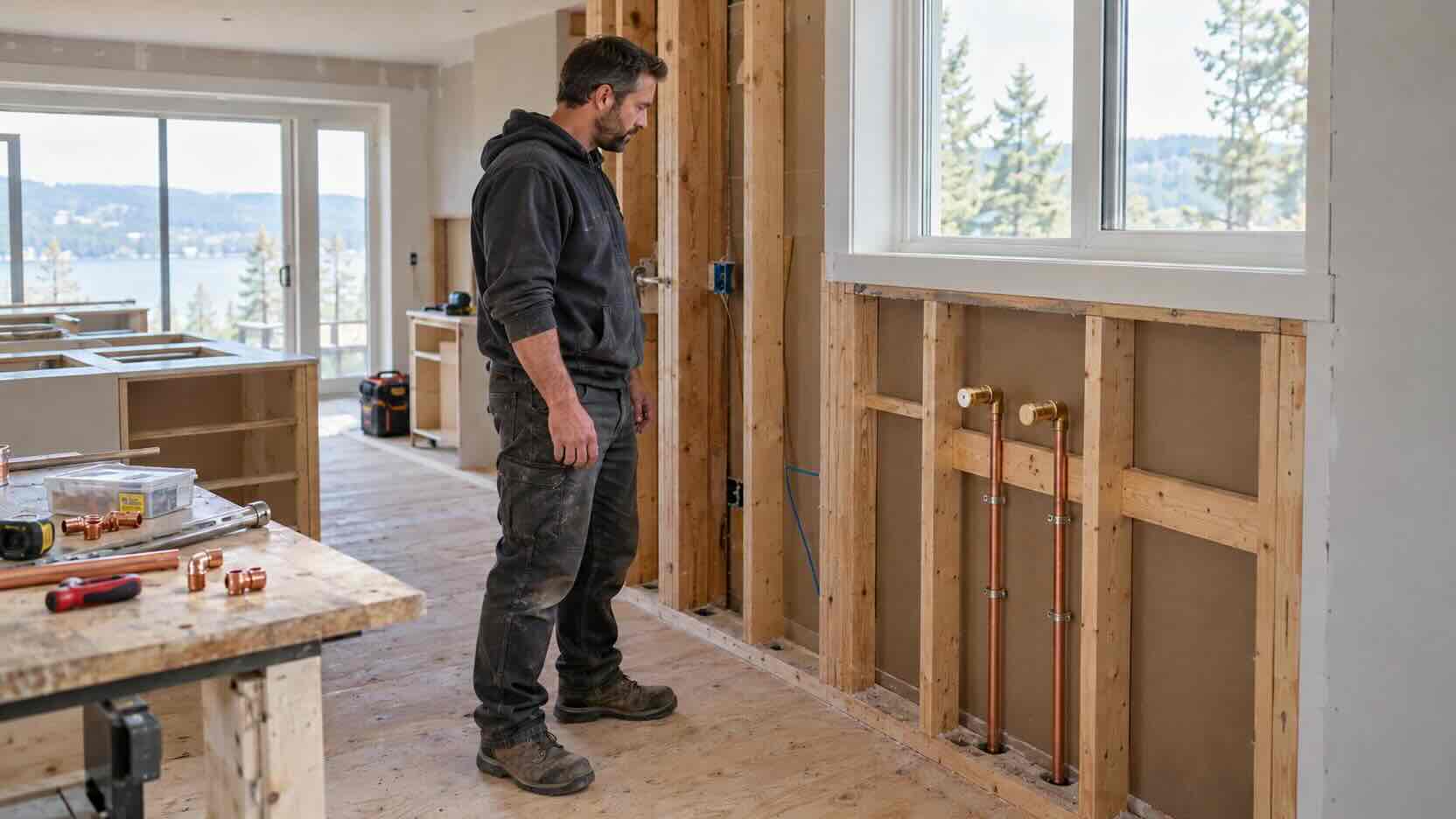
A basement renovation often begins with flooring samples, paint colours, and plans for a comfortable new living area. Plumbing usually enters the conversation later, when someone notices a pipe in the way or asks where a future bathroom could go. By then, the room layout may already be decided. Reversing those decisions can be frustrating when the most important components will soon sit behind finished surfaces.
For a Barrie household planning a basement project, an early plumbing review is a practical part of the design process. It gives you an opportunity to discuss existing drainage, sump equipment, and access before construction makes them harder to reach. The purpose is not to replace everything simply because the room is being renovated. It is to understand what should remain accessible and what deserves investigation now.
Begin with the room as it exists today
Walk through the unfinished space and record visible plumbing features without disturbing them. Photograph accessible pipe routes, cleanout locations, shut-off valves, and any sump equipment. Note old staining or repairs, but avoid deciding what caused them from appearance alone. A dry stain can reflect a resolved event, while an apparently tidy wall can hide a problem that needs professional assessment.
Keep these photographs with your renovation drawings. They can help explain the original arrangement if work later changes the room. Mark storage areas and proposed cabinetry too. A new cupboard may look harmless on a plan yet block access that a technician needs for maintenance. Thinking about access early is usually easier than finding a discreet opening after the room has been decorated.
Review drainage before covering the evidence
Tell the plumber about recurring slow fixtures, unusual drainage sounds, or previous backups. Describe when they happened and which fixtures were involved. If there has been repeated trouble, ask whether assessment or drain cleaning Barrie should be considered before the renovation proceeds. A service recommendation should be connected to the actual history and findings at the property.
Avoid treating a clear drain as proof that every part of the drainage system is in good condition. Cleaning and condition assessment answer different questions. Equally, do not assume that a concern requires extensive replacement before anyone has investigated it. Ask what the proposed work will establish and what decisions will remain open afterwards. That distinction can keep the renovation budget focused on necessary work.
Give sump equipment its own discussion
If the house has a sump system, include it explicitly in the renovation conversation. Ask how its components will be reached after the room is finished and whether the proposed layout interferes with inspection or servicing. A decorative enclosure should not make essential equipment difficult to access. The equipment and its discharge arrangement need to be considered together.
Homeowners exploring sump pump installation Barrie should discuss the property’s needs rather than choosing equipment solely by price or a specification on a box. The installer can assess the existing arrangement and explain suitable options. Ask about maintenance, testing in accordance with the equipment instructions, and what happens if the primary system cannot operate. No single product makes a basement immune to every source of water.
Decide where access will remain
Access panels are easier to incorporate when the designer and plumber discuss them before walls close. Ask which points require continued access and how the opening should be positioned. A panel hidden behind permanent furniture may technically exist yet be impractical during a service call. Think about the space needed to work, not just the space needed to see a component.
The same principle applies to storage. A basement often becomes home to seasonal boxes, cleaning supplies, and equipment. Set aside clear routes to important plumbing features. If another household member would struggle to find a shut-off or service point, improve the labelling and keep a simple location record. The arrangement should make sense to someone who did not attend the renovation meetings.
Coordinate the sequence of work
Plumbing changes, inspections where required, and finishing work need an agreed sequence. Ask the people involved who is responsible for confirming that the next stage can proceed. Do not assume that a finished-looking installation means every required check is complete. Written coordination helps when several contractors are working to different schedules.
When reviewing Barrie plumbing service options, provide a concise project description: the current room, the proposed use, any new fixtures, and known plumbing history. This helps separate a repair visit from a renovation assessment. Ask for the plumbing scope in writing and identify work such as opening walls, repairing finishes, or moving furniture that may be handled separately.
Leave room in the budget for findings
An existing home can reveal information only after a suitable inspection or approved opening. Instead of asking for certainty that no one can reasonably provide, agree on how unexpected findings will be communicated. Who receives photographs? Who approves additional work? What happens to the renovation schedule while a decision is pending? Those questions can be settled before the project becomes busy.
Keep optional upgrades separate from work needed to address a confirmed issue. That makes it easier to make decisions if the budget changes. It also prevents a long list of possibilities from being mistaken for a list of defects. Ask the plumber to explain the purpose and urgency of each recommendation in ordinary language.
Finish with a useful handover
Before the basement is fully furnished, collect photographs of completed accessible work, product information, and service instructions. Update your record of shut-offs and access points. Store the paperwork where it can be found without searching through renovation emails. A brief handover is valuable even when the project has gone smoothly.
A well-planned basement should be comfortable to use and practical to maintain. Reviewing the plumbing before the finishes go in supports both goals. You gain a clearer understanding of the systems serving the room, preserve access for future work, and make design decisions with the hidden parts of the renovation firmly in view.
