

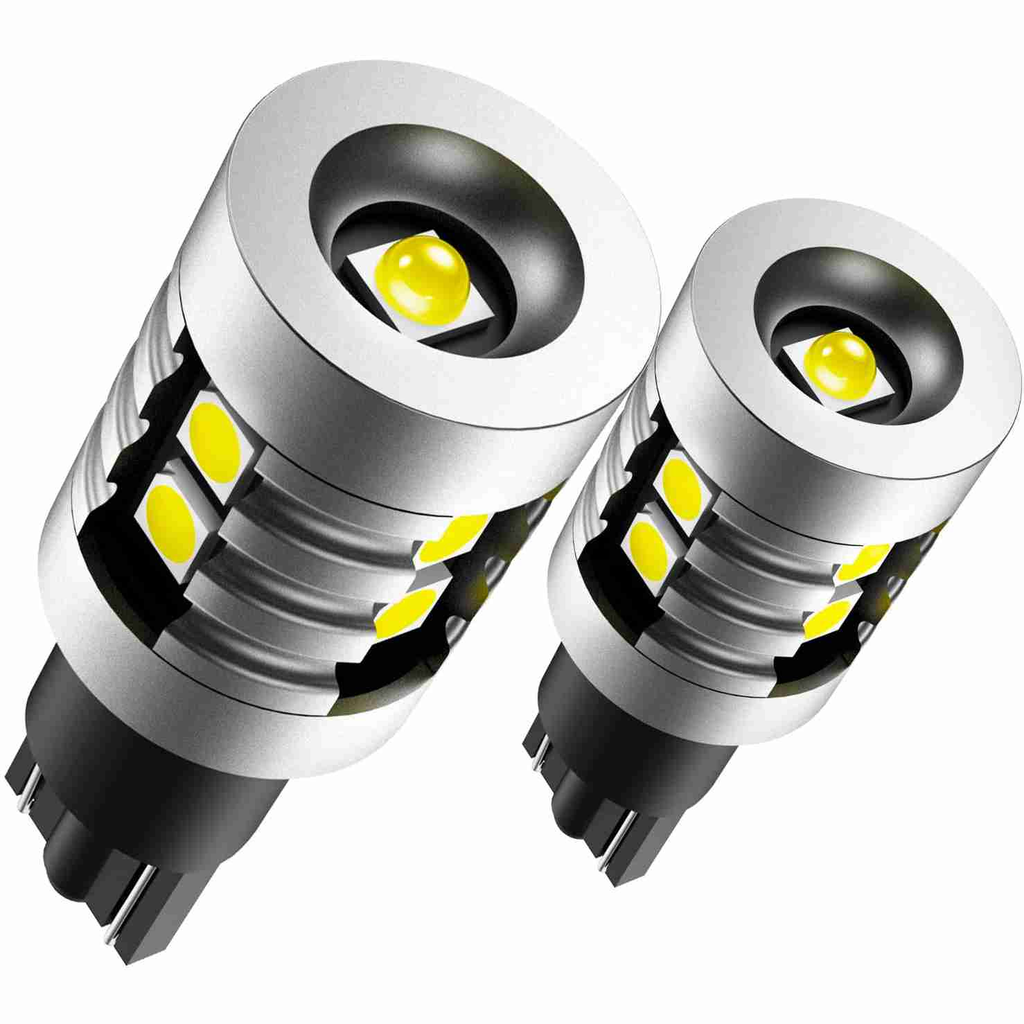
The Ford F-150 is built to handle everything from daily commuting and long highway trips to demanding work and off-road driving. But while the truck may be designed for challenging conditions, its lighting system can eventually leave drivers wanting more—especially when the factory setup uses aging halogen bulbs.
If you regularly drive your F-150 at night, on poorly lit roads, or in rain and fog, upgrading the bulbs is one modification worth considering. LED technology can provide a whiter, more modern light output while offering advantages such as compact designs, efficient operation, and long service life.
But does that automatically mean every F-150 owner should switch to LED bulbs?
Not necessarily. The right upgrade depends on your F-150’s model year, existing headlight housing, bulb size, driving conditions, and what you expect from the lighting system. A quality LED bulb also needs to work properly with the truck’s original housing and produce a useful beam pattern—not simply a high lumen number.
For drivers researching Ford F150 LED bulbs, understanding the benefits and potential limitations can make it much easier to decide whether an LED upgrade makes sense.
Why Consider an LED Upgrade for Your F-150?
Headlights are more than an appearance upgrade. They are an important part of how quickly a driver can identify road markings, pedestrians, animals, debris, curves, and other vehicles after dark.
Halogen bulbs have been used successfully in vehicles for decades, but their light can appear comparatively warm or yellow. As halogen bulbs age, their performance can also deteriorate, making an already limited nighttime lighting system feel even weaker.
LED replacement bulbs are designed to produce a bright, white appearance and can offer a different lighting experience. Depending on the bulb, housing, and vehicle application, an LED conversion can provide:
- A whiter-looking light
- Improved illumination compared with an aging halogen bulb
- A more modern appearance
- Lower replacement frequency
- Compact, plug-and-play designs on compatible applications
- Better consistency between headlights and fog lights when matched as a set
SEALIGHT specializes in automotive LED lighting and offers products organized by both vehicle and bulb size. Its F-150 lighting category includes options intended for different Ford applications, while its bulb finder can be used to verify compatibility before purchasing.
Better Visibility Is About More Than Brightness
One of the most common mistakes people make when shopping for LED headlights is focusing exclusively on brightness.
A bulb advertised with an extremely high lumen figure isn’t automatically going to produce better usable visibility. Headlight housings are designed around a particular light source and optical system. If an LED replacement doesn’t position its light-emitting elements appropriately, the resulting beam can become poorly defined.
That can create excessive glare for oncoming traffic while failing to put useful light where the driver actually needs it.
A good upgrade therefore needs to consider:
- Bulb compatibility
- Beam pattern
- Light distribution
- Color temperature
- Heat management
- Physical fit
- Electrical compatibility
- Headlamp aiming
Ford’s own F-150 performance documentation provides procedures for checking headlamp aim and notes that the beam pattern should be evaluated against a reference line. Proper aiming is especially important whenever lighting components are replaced or the headlamp assembly is changed.
LED vs. Halogen: What Changes?
The biggest difference you’ll notice is usually the character of the light.
Traditional halogen bulbs generally produce a warmer-colored light. Modern LED bulbs commonly use a cooler white appearance, which can make road signs, lane markings, and objects appear more distinct to the driver.
LED technology can also offer longer rated service life than conventional halogen bulbs. For example, SEALIGHT’s G2 series lists a rated lifespan of more than 60,000 hours and uses dedicated thermal-management components to help control operating temperatures.
However, advertised lifespan should be treated as a specification rather than a guarantee of how long a bulb will perform in every real-world situation. Heat, electrical conditions, installation quality, vibration, and operating environment can all influence component longevity.
What About Fog Lights?
Headlights and fog lights serve different purposes, so upgrading both can create a more consistent lighting setup.
Fog lights are positioned lower on the vehicle and are intended to illuminate the area closer to the road. This can be useful when driving through rain, mist, fog, or other conditions where visibility is reduced.
A coordinated headlight-and-fog-light setup can also give the front of the truck a more uniform appearance. Instead of having cool-white LED headlights paired with noticeably warmer halogen fog bulbs, matching LED technology can provide a more consistent color.
SEALIGHT’s G2 lineup includes combinations designed around common 9005 and H11-family applications. The company’s current G2 9005/H11 combination is listed with 6500K white light, IP68 water resistance, and separate headlight and fog-light specifications.
A Look at the SEALIGHT G2 9005 H11 Combination
For an F-150 that uses compatible 9005/HB3 and H11-family bulbs, the SEALIGHT G2 9005 H11 LED Headlight & Fog Light Bulbs Combo is one option worth researching.
The current G2 product page describes a six-bulb package consisting of 9005/HB3 high-beam bulbs, H11/H8/H16 low-beam bulbs, and H11/H8/H16 fog-light bulbs. It is listed with a 6500K white color temperature, IP68 waterproof rating, and a compact design intended to simplify installation.
Several features are particularly relevant for truck owners.
1. Compact Design
Space behind an F-150’s headlamp housing can be limited. A replacement bulb that closely follows the original bulb’s dimensions can make installation easier.
SEALIGHT describes the G2 as having a near 1:1 design intended to work with factory-style housings and plugs on compatible vehicles.
That doesn’t mean every F-150 will have identical installation conditions. Access and fitment can vary by model year and configuration, so checking the vehicle-specific application before ordering remains important.
2. 6500K White Light
The G2 combination is listed with a 6500K color temperature. This produces a cool-white appearance that can look substantially different from traditional yellowish halogen lighting.
Color temperature shouldn’t be confused with brightness. A higher Kelvin number doesn’t automatically mean greater road illumination. It primarily describes the perceived color of the light.
3. Thermal Management
LEDs still generate heat, particularly around the electronics and LED chips. Managing that heat is important for maintaining consistent performance.
According to SEALIGHT, the G2 uses a dual-copper heat substrate and a 6063 aluminum body as part of its thermal-management system.
For a truck that may spend hours on the road, effective heat management is an important consideration when choosing replacement LEDs.
4. Weather Resistance
The G2 series is listed with an IP68 waterproof rating. This can be particularly relevant for a truck that sees rain, wet roads, mud, snow, or off-road conditions.
Weather resistance, however, doesn’t eliminate the need for proper installation. Connectors, seals, wiring, and the headlamp housing itself should remain properly secured.
Is an LED Upgrade Right for Every F-150?
No—and that’s an important point.
The F-150 has been produced across numerous generations, trims, and lighting configurations. Some versions use different bulb arrangements, while others have factory LED headlamp assemblies rather than replaceable halogen bulbs.
SEALIGHT’s own G2 product information identifies compatibility with F-150 applications such as the 2015–2020 F-150, while also instructing buyers to verify their specific vehicle.
Therefore, don’t purchase an LED kit simply because the product name includes “F-150.”
Instead, verify:
- Model year
- Trim
- Headlight type
- High-beam bulb size
- Low-beam bulb size
- Fog-light bulb size
- Factory headlamp configuration
- Whether an additional decoder is required
The safest approach is to check your owner’s manual or use a vehicle-specific bulb finder before ordering.
What Are the Potential Drawbacks?
An LED upgrade isn’t completely risk-free. There are several things F-150 owners should consider.
Fitment Problems
Even when two bulbs share a similar designation, the actual vehicle application can differ. A bulb that fits one F-150 configuration may not be appropriate for another.
Beam Pattern Issues
Installing an LED bulb into a housing designed for a different light source can sometimes produce a beam that isn’t properly controlled.
The goal should be usable road illumination—not simply making the headlight appear brighter from the front.
Electrical Compatibility
Modern vehicles monitor lighting circuits electronically. Some LED conversions can trigger dashboard warnings, flickering, or other compatibility issues.
SEALIGHT notes that certain situations may require an additional decoder, including warning messages or problems with high/low-beam operation.
Installation Access
“Plug-and-play” doesn’t necessarily mean every installation will literally take the same amount of time. Some F-150 configurations provide easier access to the rear of the headlamp assembly than others.
If access is restricted, installation can take longer than expected.
How to Get the Most From an F-150 LED Upgrade
Once you’ve selected a compatible bulb, installation quality matters.
Check the Bulb Before Installation
Compare the new LED with the original bulb. Confirm the connector, locking tabs, orientation, and physical dimensions.
Keep the Bulb and Housing Clean
Avoid touching optical surfaces unnecessarily. Dirt or contamination can affect light output and appearance.
Confirm Proper Seating
The bulb should lock firmly into the housing. If it isn’t seated correctly, the LED emitters may not be positioned correctly relative to the reflector or projector.
Test High and Low Beams
After installation, verify every lighting function. If you’ve replaced fog lights as well, check those independently.
Check the Beam Pattern
Park the F-150 on level ground and inspect the beam against a wall or suitable surface. Ford’s headlamp-aiming documentation specifically describes using a reference line to evaluate the beam position.
If the beam appears unusually high, scattered, or asymmetric, investigate before driving at night.
When Does an LED Upgrade Make the Most Sense?
An LED conversion can be particularly appealing if your F-150 currently has:
- Aging or dim halogen bulbs
- Uneven light output
- A noticeable yellow tint
- Frequent nighttime driving
- Regular highway use
- Frequent driving in rural areas
- A need for better consistency between headlights and fog lights
- A desire for a more modern lighting appearance
On the other hand, if your truck already has a factory LED headlamp assembly that is functioning correctly, replacing individual bulbs may not be the appropriate solution.
Should You Upgrade Your Ford F-150?
For an F-150 equipped with compatible replaceable halogen bulbs, moving to quality LEDs can be a practical lighting upgrade. The potential benefits include a whiter light appearance, modernized lighting, reduced bulb replacement frequency, and—in a properly designed and installed system—useful improvements in nighttime illumination.
The key is to choose the upgrade based on the vehicle’s actual requirements rather than marketing numbers alone.
SEALIGHT offers F-150-specific lighting options and a range of bulb sizes, making it possible to narrow down products based on vehicle and application. Its G2 series is one example of a coordinated headlight-and-fog-light solution for compatible 9005 and H11-family applications.
Ultimately, the best LED upgrade is one that fits correctly, produces a controlled beam, works with the vehicle’s electrical system, handles heat effectively, and is properly aimed after installation.
For F-150 owners who spend a lot of time driving after dark, those factors make an LED upgrade worth investigating—not simply because LEDs are brighter, but because the right lighting system can make nighttime driving more comfortable and help the driver see the road environment more clearly.
