

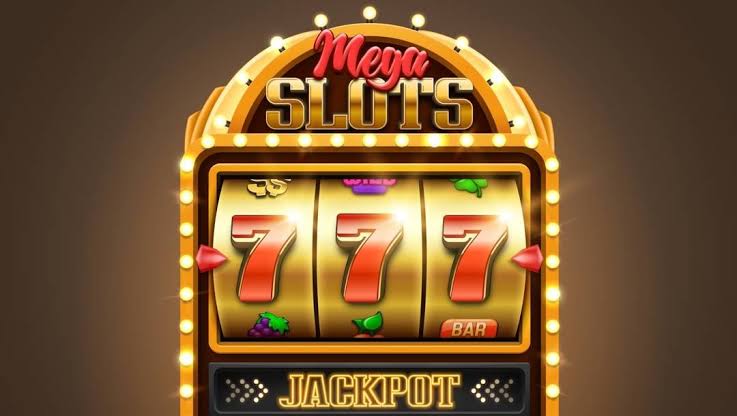
Slot games have become one of the most recognizable forms of casino entertainment. From traditional machines with simple reels to modern online titles featuring advanced graphics and interactive bonus rounds, slots have changed considerably over the years. Their straightforward basic structure makes them accessible, while the variety of themes and features gives players many different experiences to explore.
Today, slot games can be found in both physical casinos and online gaming environments. Online slots have expanded the category even further by introducing different reel configurations, innovative mechanics, mobile compatibility, and detailed visual designs. Understanding how these games work can help players approach them with realistic expectations.
What Is a Slot Game?
A slot game is a casino game based on symbols appearing on reels. A player generally selects a stake and activates the reels. When the reels stop, the resulting symbol arrangement is evaluated according to the game’s rules.
Traditional slot machines used physical mechanical reels. Modern digital slots use software to simulate reels and determine outcomes. Online versions can contain additional features that would be difficult to implement in a traditional machine.
Although the appearance of a slot can vary significantly, the underlying concept remains centered around randomly generated outcomes and predefined game rules.
Different Types of Slots
There are several major types of slot games available today.
Classic slots often use a simple design inspired by traditional machines. They may contain three reels and familiar symbols such as fruits, bells, bars, and sevens.
Video slots generally use more reels, advanced graphics, multiple paylines, and additional features. These games can be built around almost any theme.
Progressive-style slots can feature jackpot systems in which prizes may change according to the structure of the particular game.
Ways-to-win slots use alternative methods for calculating combinations rather than relying exclusively on traditional paylines.
Each type provides a different experience, so players should review the specific rules before playing.
Understanding Reels and Paylines
Reels are the vertical sections where symbols appear during a spin. A traditional slot may contain three reels, while many modern online slots use five or more.
Paylines determine which symbol combinations can produce a qualifying result. Some games have a fixed number of paylines, while others allow different configurations.
Modern games may also use systems where the number of possible combinations changes depending on the symbols appearing on the reels.
The paytable normally explains how the game’s winning combinations are calculated.
Common Slot Symbols
Symbols are a fundamental part of every slot game. Regular symbols typically have different values, while special symbols can activate additional features.
Wild symbols can substitute for selected symbols when forming combinations, depending on the game’s rules.
Scatter symbols can trigger bonus features when a required number appears.
Multiplier symbols can increase an eligible result under certain conditions.
Bonus symbols may activate a separate feature or interactive round.
Because these functions vary between games, players should not assume that a particular symbol always works in the same way.
RTP and Slot Mathematics
Return to player, commonly called RTP, is one of the most important mathematical terms associated with slots.
RTP represents a theoretical percentage calculated across a very large number of outcomes. For instance, a slot with an RTP of 96% has a theoretical long-term return of 96% under its defined conditions.
This does not mean that a player who spends $100 will receive $96 during a single session. Individual results can be significantly different.
RTP is therefore useful for understanding the mathematical design of a game but should never be considered a guarantee of personal results.
Slot Volatility
Volatility describes how a slot’s potential results are distributed.
Low-volatility games may be designed around smaller and potentially more frequent outcomes, while high-volatility games can produce greater fluctuations.
Medium-volatility games sit between these broad descriptions.
Volatility does not determine the result of an individual spin. It describes general characteristics of the game’s mathematical model over a much larger number of outcomes.
Random Number Generators
Modern digital slots typically use random number generation to determine outcomes.
A random number generator, or RNG, produces results according to the software’s programmed mathematical system. The purpose is to make individual outcomes unpredictable.
This means previous spins do not control future spins. A sequence of losses does not mean a win is guaranteed on the next spin, and a recent win does not make another win certain.
Understanding randomness can help players avoid common misconceptions about slot patterns.
Online Slot Features
Online slots can include many features that are not commonly associated with traditional machines.
Cascading reels can remove winning symbols and replace them with new ones. This may create additional combinations within the same sequence.
Free-spin rounds can provide additional spins under specified conditions.
Expanding symbols can occupy larger areas of the reels, while multipliers can increase qualifying results.
Some games include interactive bonus rounds where players make selections or complete simple tasks to determine additional outcomes.
Mobile Slot Gaming
Mobile devices have made slot games more accessible. Many online platforms are designed to work on smartphones and tablets.
Mobile-friendly slots generally use responsive layouts and touchscreen controls. Players can access game menus, review paytables, adjust settings, and operate the reels directly from their devices.
The convenience of mobile gaming also makes it important to establish personal limits before starting a session.
Responsible Slot Gaming
slot games involve financial risk when played for real money. They should therefore be approached as entertainment rather than as a guaranteed source of income.
Players can establish a budget before playing and avoid using money required for essential expenses.
Time limits can also be helpful. A player may decide in advance how long a session should last and take regular breaks.
Most importantly, losses should not be chased by increasing stakes in an attempt to recover money. Previous results do not guarantee future results.
Choosing a Slot Game
Before selecting a slot, players can review its paytable, RTP, volatility, minimum and maximum stakes, paylines, special symbols, and bonus mechanics.
A demonstration mode, when available, can also help someone understand the basic rules without using real money.
The game’s theme may influence personal preference, but understanding the mathematical and gameplay characteristics is more important than visual design.
Conclusion
Slot games have developed from simple mechanical machines into diverse digital entertainment experiences. Modern online slots can include multiple reels, creative themes, bonus rounds, special symbols, cascading mechanics, and different mathematical structures.
