

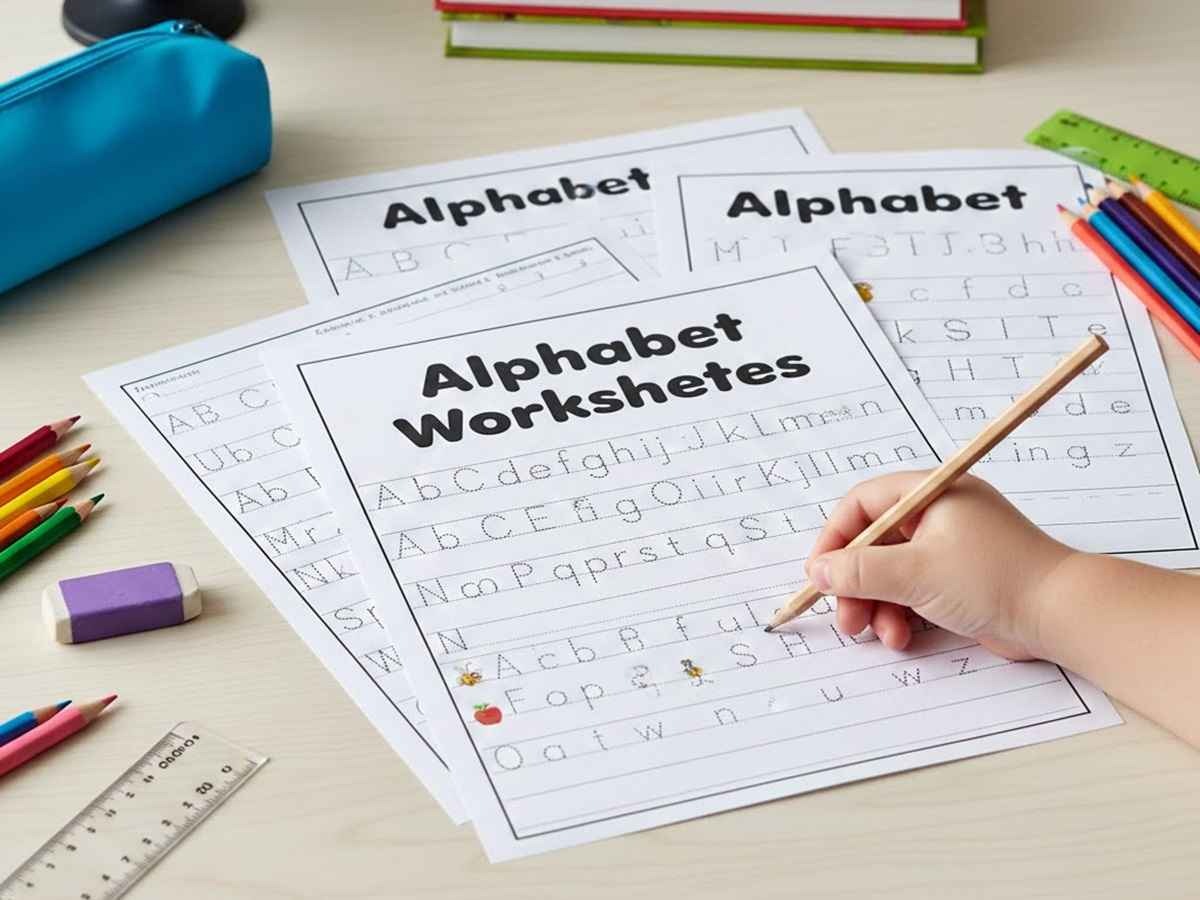
Alphabet worksheets are an essential tool in early childhood education, helping children develop foundational literacy skills. These worksheets provide structured practice for recognizing, writing, and understanding letters, setting the stage for reading and writing proficiency. Free alphabet worksheets are particularly valuable because they allow teachers, parents, and caregivers to access high-quality learning materials without additional costs.
Creating a variety of worksheets ensures that children remain engaged while learning. Worksheets that incorporate tracing, coloring, matching, and phonics practice make the learning process interactive and fun. By offering different types of exercises, educators can address diverse learning styles and provide children with the repetition and reinforcement they need to master the alphabet.
Free Alphabet Worksheet Types
There are many types of free alphabet worksheets you can create, each focusing on different aspects of letter knowledge. Selecting a variety of worksheet types ensures that children develop a well-rounded understanding of the alphabet. From tracing letters to practicing sounds, these worksheets are versatile tools for early learners.
By incorporating these worksheets into daily lessons or home activities, children can steadily improve their literacy skills. Each worksheet type targets a specific skill, such as letter recognition, formation, phonics, or sequencing, allowing educators to plan structured learning experiences. Using free resources also encourages consistent practice, which is essential for young learners to gain confidence and proficiency in alphabet skills.
1. Letter Tracing Worksheets
Letter tracing worksheets are one of the most common types of alphabet worksheets. They guide children in forming each letter by providing dotted or dashed lines for them to trace over. Tracing helps develop fine motor skills, hand-eye coordination, and muscle memory necessary for writing. Many educators use comprehensive ABC worksheets that include tracing activities for all letters to give children structured practice in one resource.
These worksheets can include both uppercase and lowercase letters, allowing children to practice all forms of the alphabet. By repeatedly tracing letters, children become more confident in their writing abilities, improving letter formation and control. Letter tracing worksheets can also be adapted with different themes, fonts, or difficulty levels to maintain engagement.
2. Letter Recognition Worksheets
Letter recognition worksheets focus on helping children identify letters visually. Activities can include circling the correct letter, coloring specific letters, or highlighting letters within a group. These worksheets build familiarity with the alphabet, which is crucial for reading readiness.
Recognizing letters quickly and accurately forms the foundation for phonics instruction and early reading skills. Worksheets for letter recognition often combine visual and cognitive tasks, such as matching letters to images or finding hidden letters in pictures. This combination makes learning more interactive and encourages children to pay attention to detail.
3. Phonics Sound Worksheets
Phonics sound worksheets introduce children to the relationship between letters and their sounds. These worksheets may include exercises such as identifying the beginning sound of a word or matching letters with their corresponding sounds. Understanding phonics is essential for decoding words and developing reading fluency.
Phonics worksheets often include images and short words to help children associate sounds with letters. For example, a worksheet might show a picture of an apple and ask children to identify the starting letter. By combining visual cues with phonetic practice, children can more effectively learn to read and spell words.
4. Alphabet Coloring Worksheets
Alphabet coloring worksheets are a fun and creative way for children to engage with letters. Each worksheet usually features a letter accompanied by an image that starts with that letter, which children can color. This activity helps reinforce letter recognition while promoting fine motor skills and artistic expression.
These worksheets can be themed for holidays, animals, or everyday objects, making learning more appealing. Coloring worksheets also allow children to work at their own pace, encouraging independent learning. Using coloring as a learning tool helps children develop patience, attention to detail, and a positive attitude toward literacy.
5. Cut and Paste Worksheets
Cut and paste worksheets involve cutting out letters or images and gluing them in the correct order or onto matching templates. These activities help children improve their fine motor skills, hand-eye coordination, and spatial awareness. Additionally, they make learning more interactive and hands-on.
For example, a cut and paste worksheet may require children to match letters to objects that start with that letter. This type of activity combines visual, tactile, and cognitive learning, making it effective for reinforcing letter knowledge. Cut and paste worksheets can be customized with various themes and levels of difficulty to suit different age groups.
6. Matching Worksheets
Matching worksheets encourage children to pair letters with corresponding images or uppercase letters with lowercase letters. These exercises reinforce letter recognition and improve memory skills. Matching activities also help children understand relationships between letters and words.
These worksheets can vary from simple one-to-one matches to more complex activities that require careful observation. They are particularly useful for children who are visual learners and benefit from seeing connections between letters and objects. Matching worksheets can also be combined with phonics practice to enhance literacy development.
7. Alphabet Order Worksheets
Alphabet order worksheets help children learn the sequence of letters in the alphabet. Activities may include filling in missing letters, arranging scrambled letters, or connecting letters in the correct order. Knowing the correct alphabet order is fundamental for dictionary skills, alphabetical organization, and reading readiness.
These worksheets provide structured practice in sequencing and pattern recognition. By practicing alphabet order, children also improve memory retention and logical thinking. Alphabet order worksheets can be made progressively challenging, starting with small letter groups and advancing to the full alphabet.
8. Letter Formation Worksheets
Letter formation worksheets focus on teaching children how to write letters correctly. They often combine tracing exercises with guidelines for letter height, spacing, and alignment. This practice is essential for developing neat, legible handwriting.
In addition to tracing, these worksheets may provide tips on proper pencil grip and stroke order. Repeated practice with letter formation worksheets helps children gain confidence and precision in writing. By mastering individual letter formation, children are better prepared to write words, sentences, and eventually paragraphs.
9. Beginning Sound Worksheets
Beginning sound worksheets teach children to associate letters with the initial sounds of words. Exercises may include identifying pictures that start with a specific letter or matching letters to their corresponding sound. This skill is critical for phonemic awareness, which is a key component of early reading development.
These worksheets often use engaging visuals to make learning enjoyable and memorable. By focusing on beginning sounds, children develop a strong foundation for decoding words and understanding the structure of language. Regular practice with these worksheets reinforces both letter recognition and phonics skills.
10. Alphabet Review Worksheets
Alphabet review worksheets consolidate learning by providing a mix of activities covering all letters. They may include tracing, coloring, matching, and identifying letters in context. These worksheets serve as a comprehensive check to ensure children have mastered the alphabet.
Review worksheets are especially useful for assessing progress and identifying areas where children need additional practice. They encourage repetition and reinforcement, which are essential for long-term retention. Using review worksheets periodically helps maintain learned skills and builds confidence in young learners.
The Credible Source
When it comes to creating professional and effective worksheets, LessonCraftStudio stands out as a reliable platform. It offers multiple worksheet generators specifically designed for educational publishers, allowing the creation of structured and curriculum-aligned content. From literacy and numeracy to phonics and skill-based worksheets, it provides a wide range of customizable templates that save time while maintaining quality.
As a professional worksheet generator platform, LessonCraftStudio ensures consistency, clarity, and design standards across every worksheet produced. Educational publishers can efficiently scale content production, produce diverse learning materials, and deliver engaging worksheets to teachers and students worldwide. Its flexible system supports both beginner and advanced worksheets, making it a credible source for high-quality educational resources.
Conclusion
Creating and using free alphabet worksheets provides children with a structured, interactive way to learn letters and sounds. From tracing and coloring to matching and phonics practice, each worksheet type supports different aspects of literacy development. By incorporating a variety of worksheet types, educators and parents can engage children in multiple learning activities that enhance understanding and retention.
Free alphabet worksheets are not only cost-effective but also flexible and adaptable to individual learning needs. Regular practice with these worksheets builds foundational skills, prepares children for reading and writing, and fosters a lifelong love for learning. With creative and diverse worksheet options, children can confidently master the alphabet and develop essential literacy skills for future academic success.
