

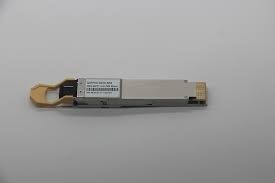
Artificial intelligence has transformed the way data centers are designed. Modern AI training clusters consist of thousands of GPUs that continuously exchange massive volumes of data, placing unprecedented demands on network bandwidth and latency. As network speeds move beyond 400G, optical interconnects have become the preferred solution for maintaining high-performance communication between servers, switches, and storage systems. Among the available options, 800G QSFP-DD modules are emerging as a key technology for supporting the next generation of AI infrastructure.
For short-distance connections inside AI data centers, not every deployment requires long-reach single-mode optics. Many links are limited to connections within the same rack or between adjacent racks, making multimode fiber an economical and practical choice. This is where 800G QSFP-DD modules based on the SR8 standard deliver significant value. By combining ultra-high bandwidth with low-cost multimode cabling, they provide an efficient solution for high-density networking environments.
The 800GBASE-SR8 QSFP-DD optical transceiver operates over 850nm wavelength using PAM4 modulation and supports transmission distances of up to 50 meters on multimode fiber through an MPO-16/APC interface. Designed for short-reach Ethernet applications, 800G QSFP-DD modules offer the performance, reliability, and scalability required for AI clusters while minimizing deployment costs compared to longer-reach optical solutions.
Understanding the 800GBASE-SR8 Architecture
High-Speed Parallel Optical Transmission
The 800GBASE-SR8 standard achieves an aggregate bandwidth of 800Gbps by utilizing eight parallel optical transmit channels and eight parallel receive channels. Each lane operates at 100Gbps using PAM4 signaling, allowing the module to deliver extremely high throughput while maintaining manageable signal integrity. This parallel optical architecture is particularly well suited for data center environments where high-density cabling and predictable transmission distances are common.
Unlike long-reach transceivers that rely on single-mode fiber and 1310nm lasers, SR8 modules use 850nm VCSEL technology over multimode fiber. VCSELs are highly efficient, cost-effective, and well suited for short-distance communication, making them the preferred choice for rack-level and row-level interconnects. Since the maximum transmission distance is typically 50 meters, signal attenuation remains low while deployment costs are significantly reduced.
MPO-16 Connectivity for High-Density Cabling
The module uses an MPO-16/APC connector, which accommodates the multiple parallel optical lanes required for 800G transmission. Compared with traditional duplex LC connectors, MPO-16 enables much higher fiber density while simplifying cable routing inside high-performance data centers. This compact interface supports faster installation and cleaner cable management, helping operators maintain organized rack layouts and improve airflow around networking equipment.
Why Short-Reach Connectivity Is Critical for AI Data Centers
AI training infrastructure generates enormous amounts of east-west traffic as GPUs exchange model parameters, gradients, and intermediate computation results. These communications typically occur between servers located within the same rack or neighboring racks, where transmission distances rarely exceed a few dozen meters. As a result, deploying long-reach optics for every connection would unnecessarily increase both equipment costs and overall power consumption.
Short-reach optical modules such as 800G SR8 are specifically optimized for these scenarios. They deliver the bandwidth needed for AI workloads while eliminating the additional expense associated with single-mode lasers and long-distance optical components. By matching the module’s capabilities to actual deployment distances, operators can build more cost-effective AI networks without sacrificing performance.
Another important consideration is latency. AI applications often involve synchronized communication among thousands of accelerators, making low-latency networking essential for efficient distributed training. Short optical paths combined with simplified optical architectures help minimize communication delays, improving overall cluster efficiency and reducing training times.
Cost Advantages of Multimode Fiber Deployments
Lower Infrastructure Investment
One of the strongest advantages of 800G QSFP-DD SR8 modules is their ability to leverage existing multimode fiber infrastructure. Many enterprise and hyperscale data centers already have extensive OM4 or OM5 cabling installed for previous generations of Ethernet networks. Rather than replacing this infrastructure with single-mode fiber, organizations can upgrade network bandwidth while continuing to use their existing fiber plant, significantly lowering migration costs.
The use of VCSEL-based optics also contributes to lower module costs. Compared with single-mode transceivers that require more complex laser technologies and optical assemblies, SR8 modules generally offer a more economical solution for short-distance deployments. This allows operators to allocate more of their budget toward compute resources, where investment often delivers greater returns for AI applications.
Reduced Operating Expenses
Cost savings extend beyond the initial purchase. Multimode optical systems often consume less power for short-reach communication, contributing to lower operational expenses over the lifetime of the data center. When thousands of transceivers are deployed across a large AI cluster, even modest improvements in power efficiency can translate into significant reductions in electricity consumption and cooling requirements.
Supporting High-Density AI Network Architectures
Modern AI data centers are designed around highly scalable spine-leaf architectures that maximize bandwidth while minimizing network bottlenecks. High-port-density switches equipped with QSFP-DD interfaces allow operators to aggregate enormous amounts of traffic within a relatively small physical footprint. The compact design of the QSFP-DD form factor enables more 800G ports per switch, increasing overall network capacity without requiring additional rack space.
GPU servers are another major application for SR8 modules. As accelerators continue to increase in computational capability, their network interfaces must keep pace with rising communication demands. The combination of 800Gbps bandwidth and short-reach multimode connectivity makes SR8 modules ideal for linking GPU servers to top-of-rack switches, enabling high-speed communication across AI clusters while maintaining efficient rack-level cabling.
In addition, the DDM (Digital Diagnostic Monitoring) function provides real-time visibility into operating parameters such as temperature, voltage, optical transmit power, and receive power. This allows network administrators to monitor module health proactively, detect potential issues early, and maintain high network availability in mission-critical AI environments.
Future-Proofing AI Infrastructure
As AI models continue to grow in size and complexity, network bandwidth requirements will only increase. Deploying 800G infrastructure today provides organizations with a scalable foundation for future expansion while delaying the need for additional network upgrades. Since many AI deployments initially concentrate on short-distance communication, SR8 modules offer an ideal balance between performance and investment.
Furthermore, the standardized QSFP-DD form factor ensures broad compatibility across a wide range of Ethernet switches and networking platforms. This flexibility allows data center operators to expand or upgrade their infrastructure without becoming locked into proprietary optical solutions, simplifying long-term network planning.
Conclusion
The 800GBASE-SR8 QSFP-DD optical transceiver is purpose-built for the high-bandwidth, low-latency requirements of modern AI data centers. Its combination of 800Gbps throughput, PAM4 signaling, 850nm VCSEL technology, MPO-16 connectivity, and multimode fiber support makes it an exceptionally efficient solution for short-reach networking.
By reducing infrastructure costs, improving port density, supporting existing multimode cabling, and delivering the performance needed for GPU-intensive workloads, the 800G QSFP-DD SR8 module has become an ideal choice for next-generation AI clusters. As organizations continue to expand their AI capabilities, this short-reach optical solution will remain a key enabler of scalable, reliable, and cost-effective data center networks.
