

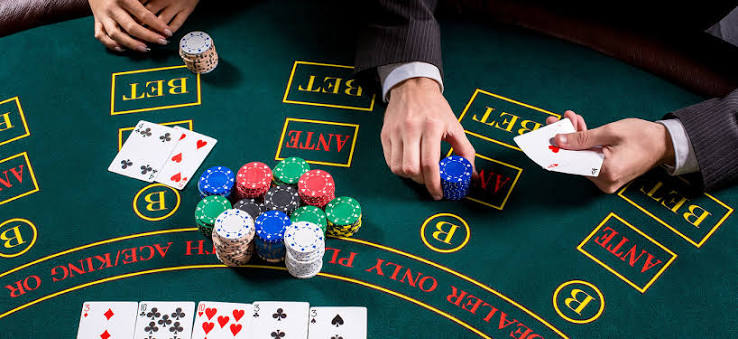
Anyone can learn the rules of a card game in an afternoon. Learning to play it well takes longer, because good play is less about memorising charts and more about judgement: when to press an advantage, when to fold and walk away, and how to size bets so that a bad hour never ruins your week. This article focuses on the strategic layer that sits above the rules — the decisions experienced players make automatically, and that beginners can start practising from their very next session.
You will find plenty of opportunities to apply these ideas in the card rooms of hit club, where poker, baccarat, blackjack and regional Vietnamese variants run at every stake level around the clock.
Position and Information
In poker-style games, where you sit relative to the dealer changes what you know. Acting last is a structural advantage: you have watched everyone else bet, check or fold before committing your own chips, and information is the currency of card games. Beginners should play tighter from early positions, where they must act blind, and loosen up when acting late with the benefit of the table’s story in front of them.
Information discipline runs the other way as well. Consistent bet sizing gives away less than erratic sizing. If you bet big only when strong and small only when weak, observant opponents will read you like a scoreboard. Vary your timing and amounts within reason, and in games against a dealer rather than other players, focus instead on flawless execution of basic strategy — the mathematically correct decision for every hand, which in blackjack can be learned from a single chart.
Reading the Flow of a Session
Every session has a rhythm, and the game bài hitclub tables illustrate it clearly: hot streaks feel unstoppable, cold streaks feel personal, and both are usually just variance doing what variance does. The strategic error is believing the rhythm predicts the next hand. Cards have no memory. What you can control is your response — players who set a stop-loss and a win target before starting tend to leave with their results, good or bad, intact.
Table selection is an underrated strategic weapon. In player-versus-player games, your profit comes from opponents’ mistakes, so a table of loose, casual players is worth more than a table of silent regulars. In dealer games, choose the variant with the rules most favourable to you: in blackjack, for instance, a game paying 3:2 on blackjack with the dealer standing on soft seventeen has a noticeably lower house edge than a 6:5 game.
Emotional control belongs in the same discussion. Tilt — the frustration-driven urge to win back losses immediately — has ended more sessions than bad cards ever have. Build a physical circuit-breaker into your routine: stand up, make a drink, step away from the screen for five minutes after any hand that genuinely stings. Decisions made after that pause are measurably better than decisions made inside it, in card games as in most things.
Bet Sizing and Bankroll Structure
The most common strategic failure is not a bad decision in a hand but a bad decision about money. A workable structure is to bring a session bankroll of at least fifty times your typical bet for dealer games, and considerably more for poker, where swings are larger. Bets of one to two percent of your total bankroll keep you in the game through the inevitable cold stretches.
Increasing bets to recover losses — the martingale instinct — feels logical and is mathematically ruinous: a short losing run at doubled stakes can consume a bankroll built over weeks. If a session is going badly, the correct strategic move is the unglamorous one: drop down a stake level or stop entirely. The tables will be there tomorrow, and strategy, ultimately, is the art of making sure you are too.
